
I’ve been an operator in the SaaS ecosystem since mid-2023. I first came across SaaSBoomi via Annual ’24 on the web. SaaSBoomi Annual ’24 was my first introduction to the community — and something about it just stayed with me. I told myself I’d volunteer someday — once I’d learned a bit more about SaaS from a business model point of view, once I felt I had something meaningful to offer.
On 16th October 2025, I finally sent Avinash a cold message on LinkedIn saying I’d like to volunteer.
No response for a while. So, I followed up. And then followed up again. Eventually, Avinash replied and carved out time from what I already knew was a packed calendar. We got on a call. He listened — really listened — and was genuinely warm and appreciative toward my background and experience. Then he told me about a few problems SaaSBoomi was trying to solve and asked me to brainstorm on two of them and come back with a deep-dive and potential solutions.
I took a weekend, went deep, came back the following week, and presented what I had. Something in that work clicked. He started involving me in initiatives — first the AI Office of AIBoomi, then he asked me to lead the Young Innovator’s Showcase at AIBoomi ONE Bangalore in December 2025. And then, something I hadn’t imagined happened — Avinash and Keerthi asked me to be the SaaSBoomi Fellow for 2026. Past Fellows have gone on to start their own companies, shaping the ecosystem in meaningful ways. Being trusted to carry that forward, this early in my own journey — it’s the kind of thing that stays with you and quietly shapes what you want to build next.
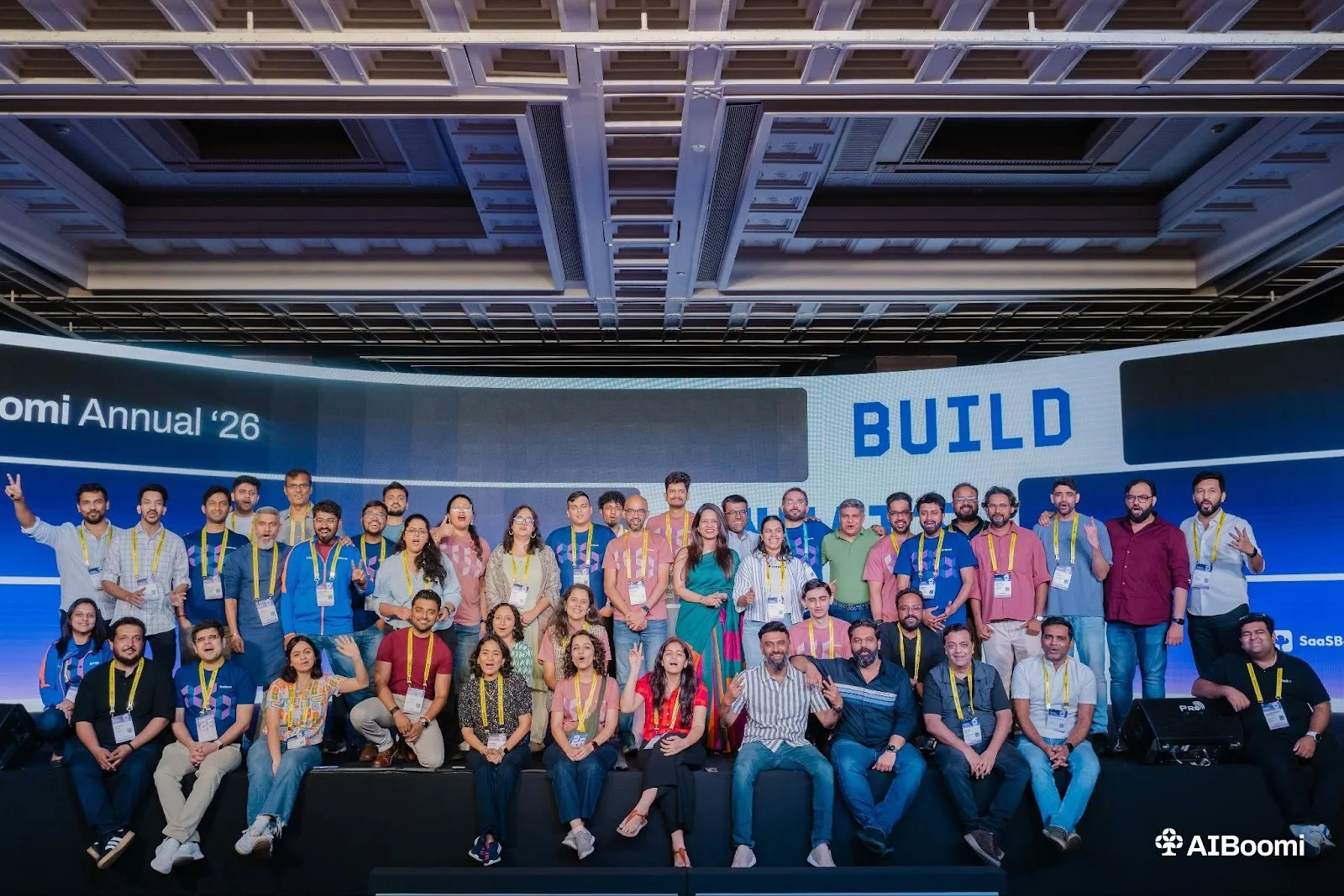
Fast forward to March 2026, and there I was at ITC Grand Chola in Chennai — attending my first-ever AIBoomi Annual. Not just as an attendee, but as a Volunteer. Helping run VC Bridge, managing the LaunchPad, and serving as one of the Hall Managers for Rajendra Hall 6, 7, and 8 across both days.
I wasn’t prepared for what that experience would feel like.
The room was different
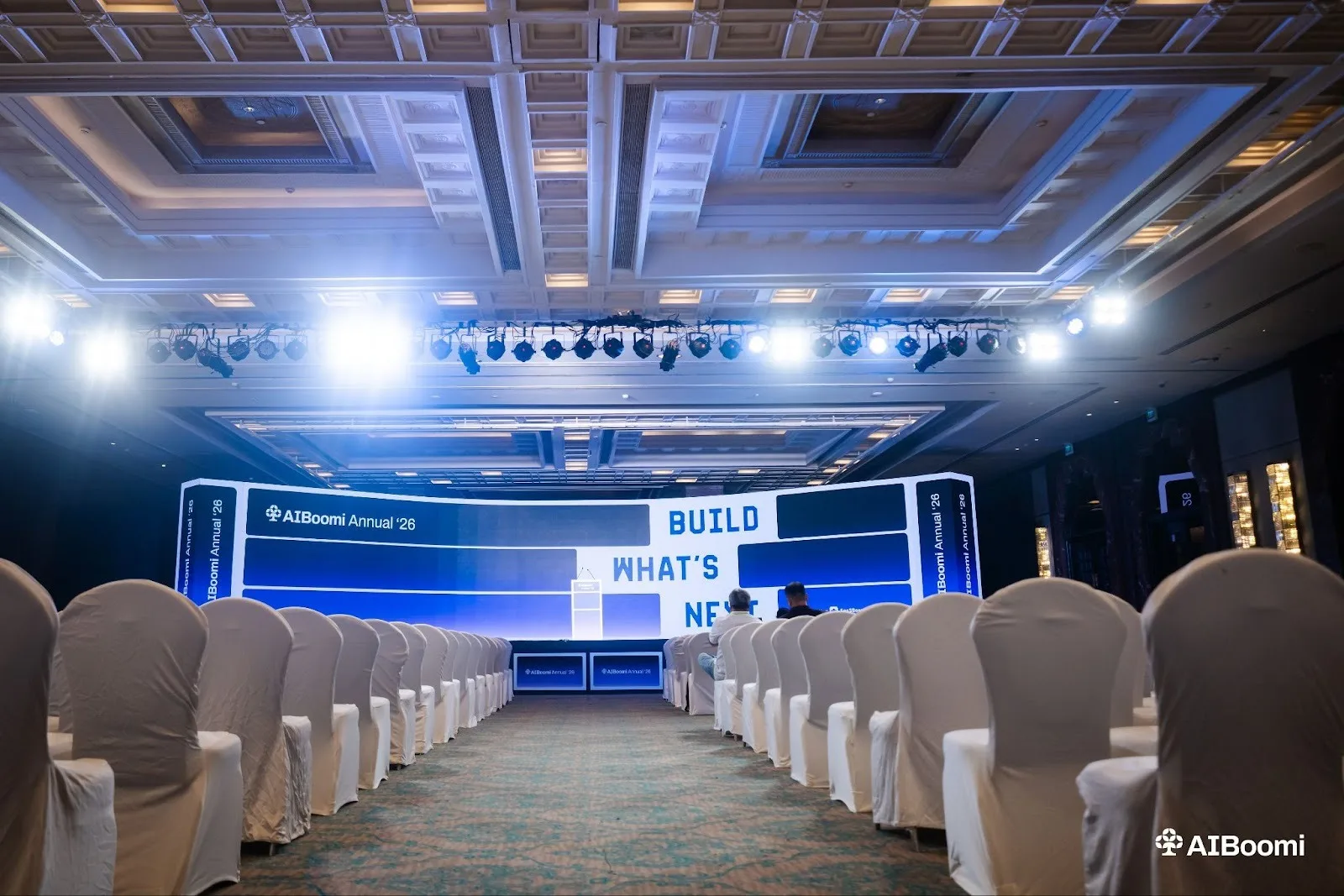
This wasn’t like any tech conference I’ve attended before.
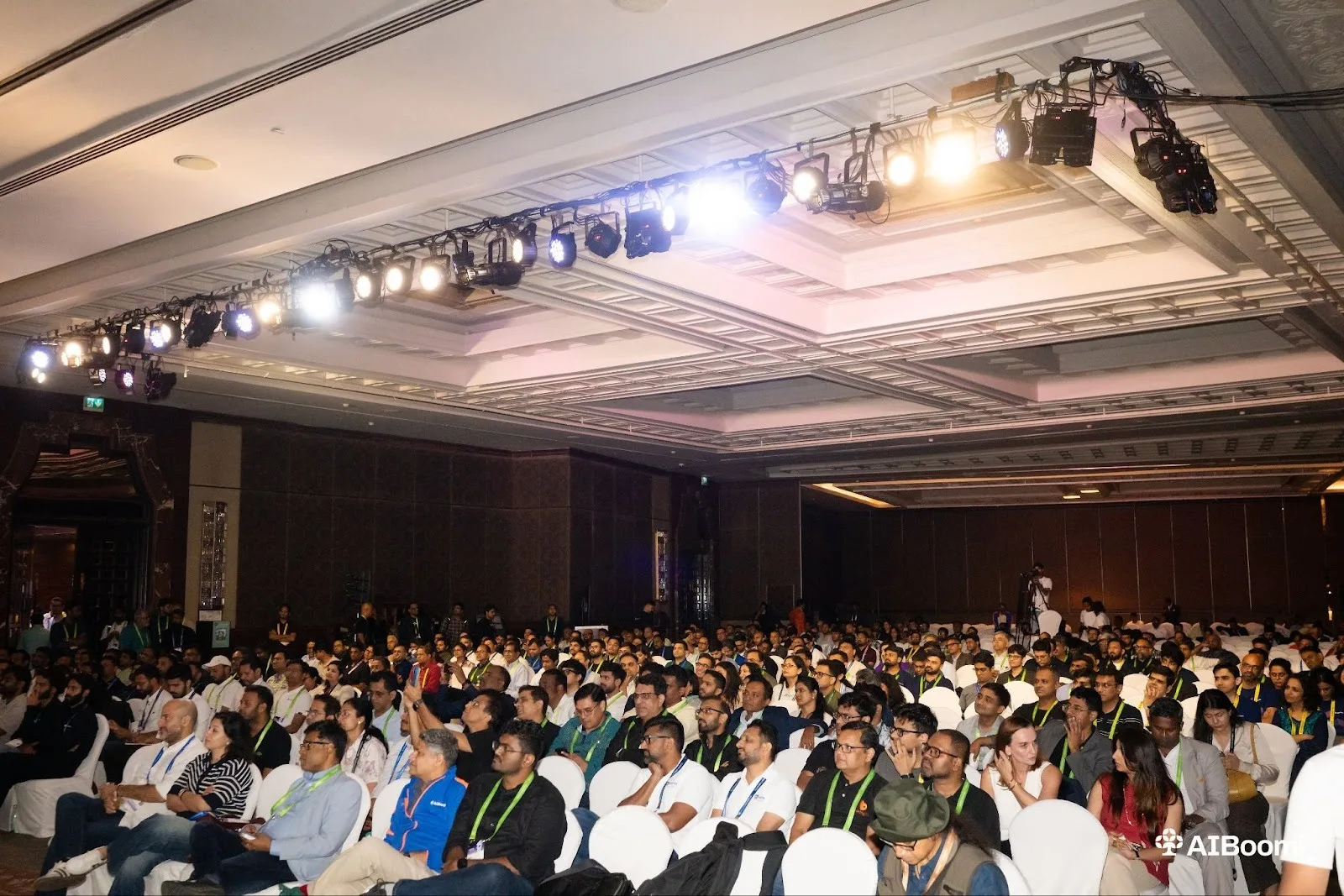
Over a thousand people were in the room. And roughly 60% of them? Founders. Not people who came to watch — people who are building. Every day. Chasing customers, shipping products, staying up late rethinking their pricing page. Most of them were pre-$2M ARR. Early-stage, figuring things out, and hungry to learn from anyone a few steps ahead.
What really got me was the mix. The room had almost equal numbers of pure SaaS and pure AI founders, with many more somewhere in between. About half had AI at the core of what they’re building, but nearly 45% were still exploring or prototyping. Everyone was navigating the same shift — SaaS to AI — just at different speeds.
And here’s the part that surprised me most: ~90% of these founders are already selling outside India. Five-person teams going after global markets. That kind of ambition,packed into one room — it was hard not to feel the energy.
One Session I Keep Thinking About
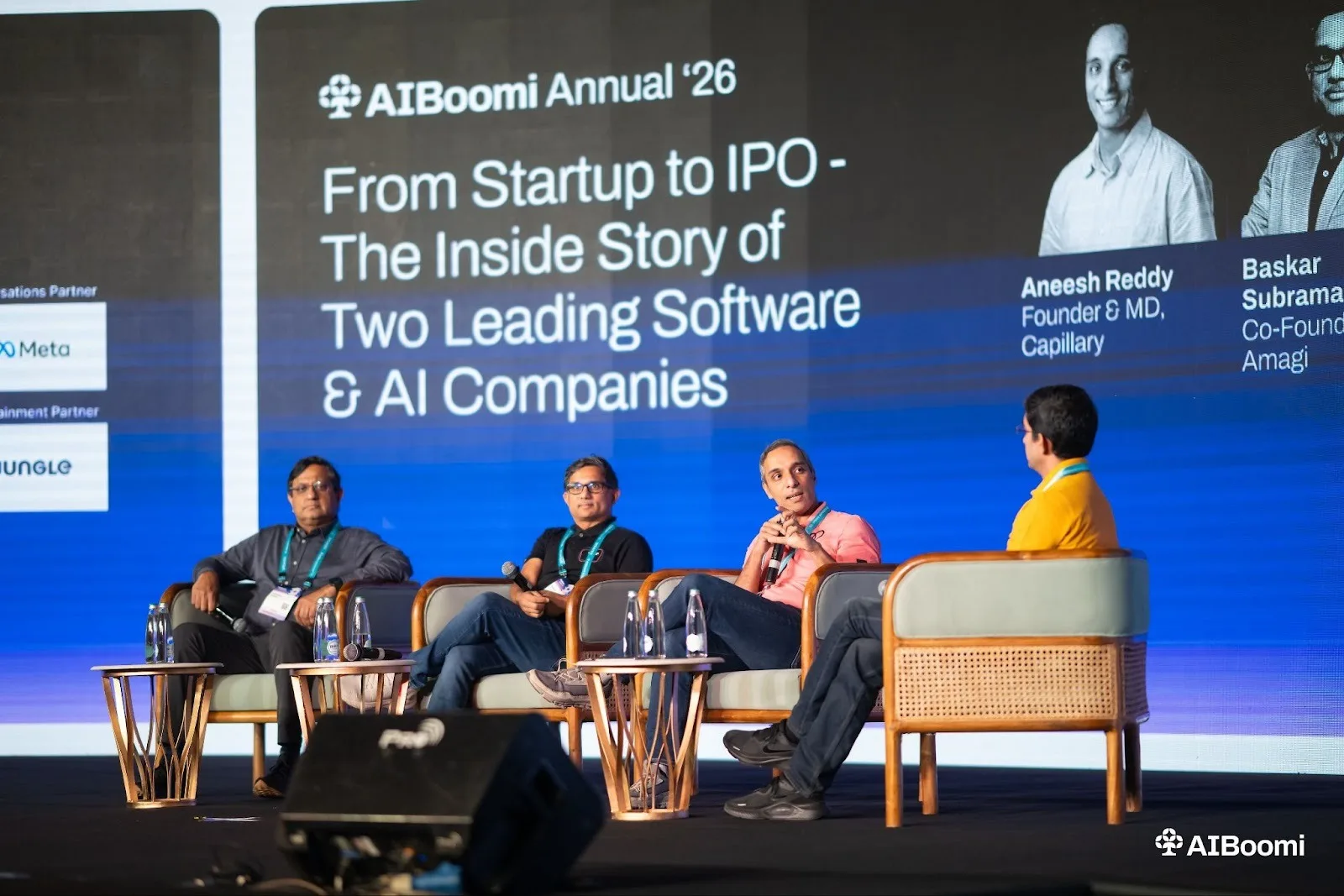
There were sessions across every track, but if I had to pick one that genuinely moved something in my head, it was “From Startup to IPO — the Inside Story of Two Leading Software & AI Companies”. Aneesh Reddy from Capillary and Baskar Subramanian from Amagi — both started in 2008, both recently took their companies public — in conversation with Mohan Kumar from Avataar Ventures, moderated by Saikiran Krishnamurthy from xto10x. Four people on stage with a combined 65+ years of building experience, and they spoke with a kind of honesty you rarely hear at conferences.
Two things I’ll carry with me from that session.
Aneesh talked about how Capillary hit a growth ceiling around $27–28M in revenue — this was roughly 12 years into the journey. Their TAM had become too narrow. Retail, Asia, loyalty — they’d already captured close to 10% of a $300M market. Growth had slipped to the low teens. It took COVID to force the reinvention they needed — expanding beyond retail, entering the US, shutting down products that weren’t category-leading. The way he framed it really landed: product-market fit isn’t a box you check once. You must keep earning it, every four or five years.
And then Baskar shared something that hit even closer to home for a room full of AI builders. When Amagi pivoted to cloud, every market research report out there said the TAM was tiny. He recalled a moment among the co-founders where they looked at each other and asked, “What the hell are we doing?” But the reports were wrong — because the market simply hadn’t been created yet. No analyst can size something that doesn’t exist. That one line made me think deeply, because it’s exactly where so many founders in the room are right now — building for a future that no report has caught up to yet.
VC Bridge: Seeing both sides of the table
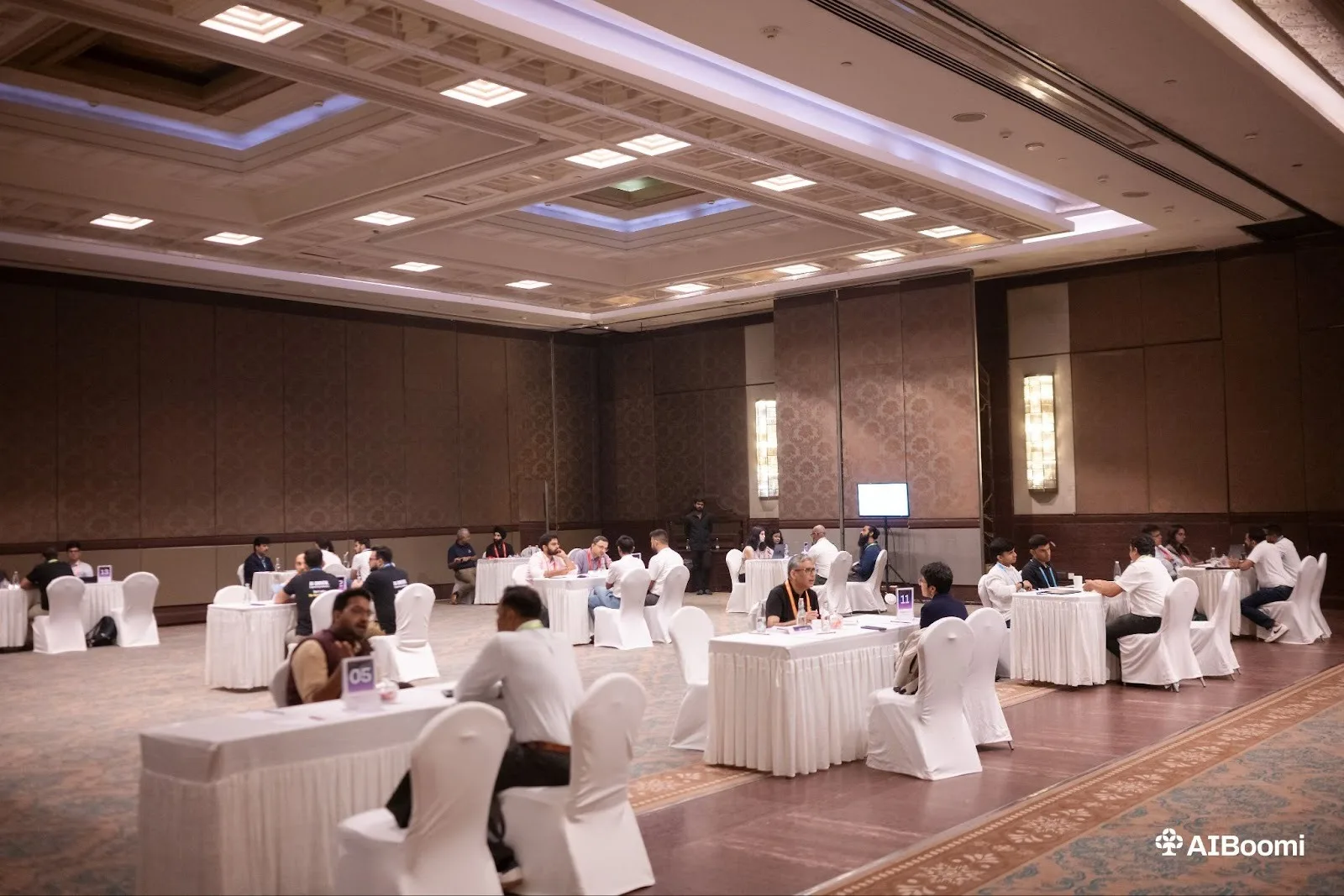
One of my responsibilities was helping run VC Bridge — a format where early-stage founders get structured time with investors. What I didn’t expect was how much I’d learn just by being in the room.
You hear a lot about fundraising from the founder’s side: the pitch, the deck, the nervousness. But sitting through VC Bridge, I got to see the investor’s side too — what they lean into, what makes them pause, the kinds of questions that signal genuine interest versus polite curiosity. It gave me a more complete picture of how the fundraising conversation actually works, beyond what you read in blog posts.
As someone put it during the event: “VCBridge > Shark Tank”. I wouldn’t disagree.
The MindMixers and the Hallway
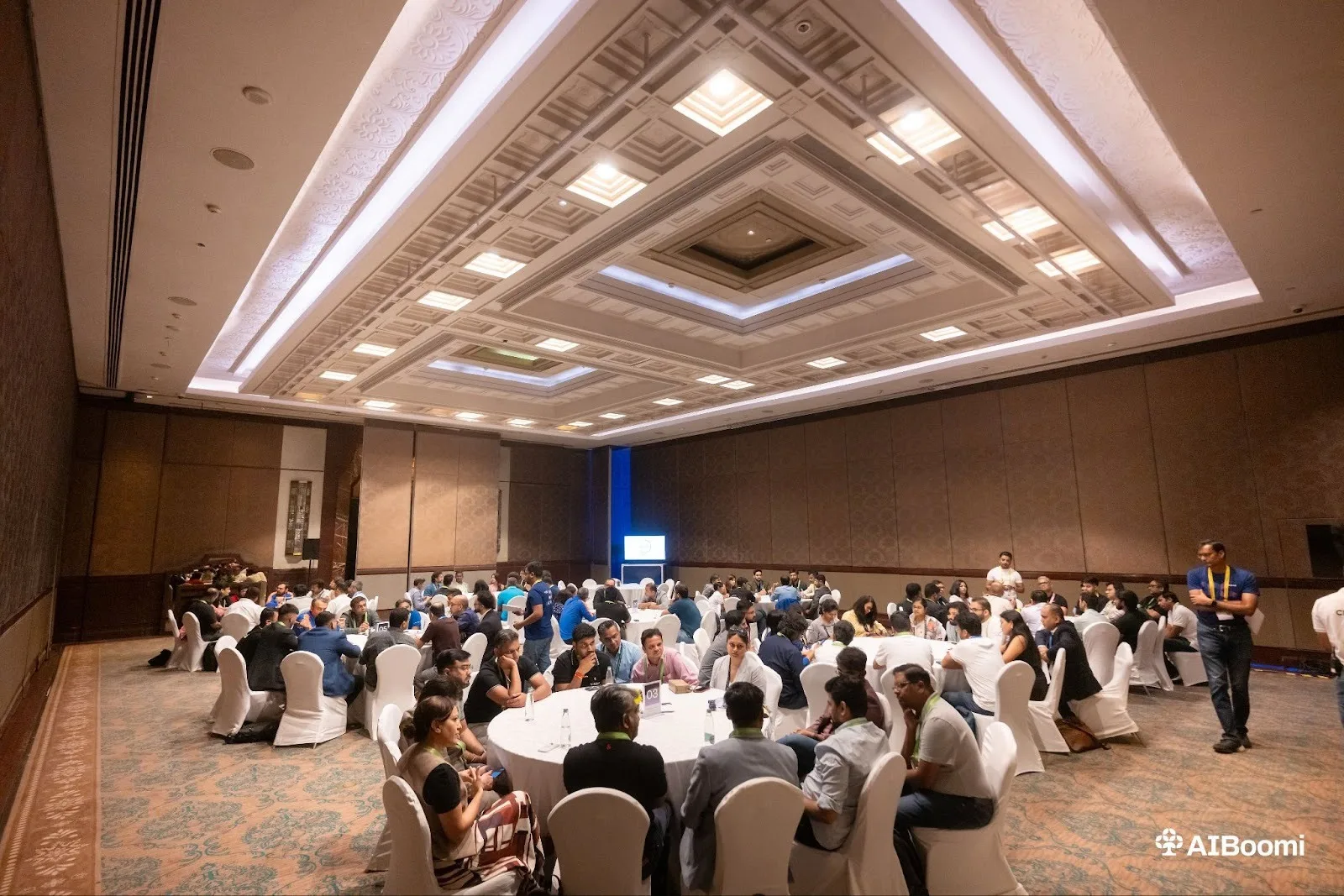
The formal sessions were great, but the MindMixers — small, focused group discussions — were where things got real. No slides, no scripts. Just people sharing what they’ve tried, what broke, and what they’d do differently. Topics ranged from AI-first GTM strategies to pricing models for AI agents to how traditional SaaS moats like data, integrations, and switching costs translate into the AI era.
One theme kept surfacing across almost every conversation I had: distribution is getting harder, even as building is getting easier. Tools and frameworks have lowered the barrier to shipping an AI product but getting it into the hands of paying customers — especially at enterprise scale — that’s where the real game is. Proprietary data, workflow integrations, and trust are becoming the moats that matter.
And honestly, some of the best conversations I did or heard weren’t in any session at all. They happened in hallways, over coffee, during lunch. I spoke with bootstrapped founders who already had paying customers and were thinking about defensibility from day one. I met people building for prosumers, for enterprises, for vertical niches I hadn’t even considered. India’s AI ecosystem is quietly more mature than most people give it credit for.
The Volunteers
I need to talk about this because it changed how I think about community.
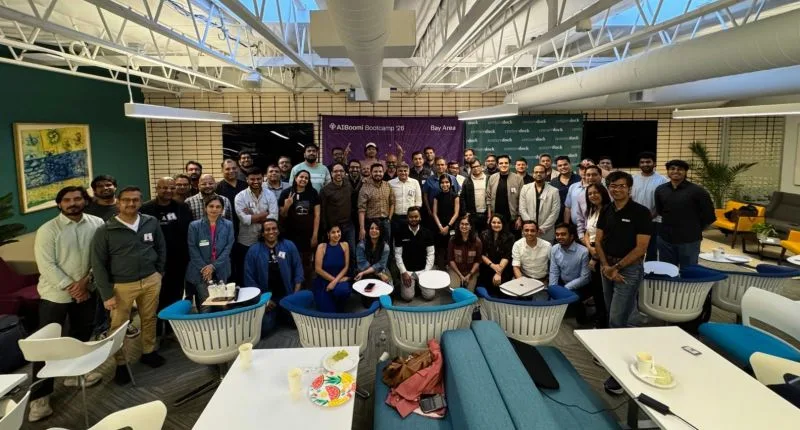
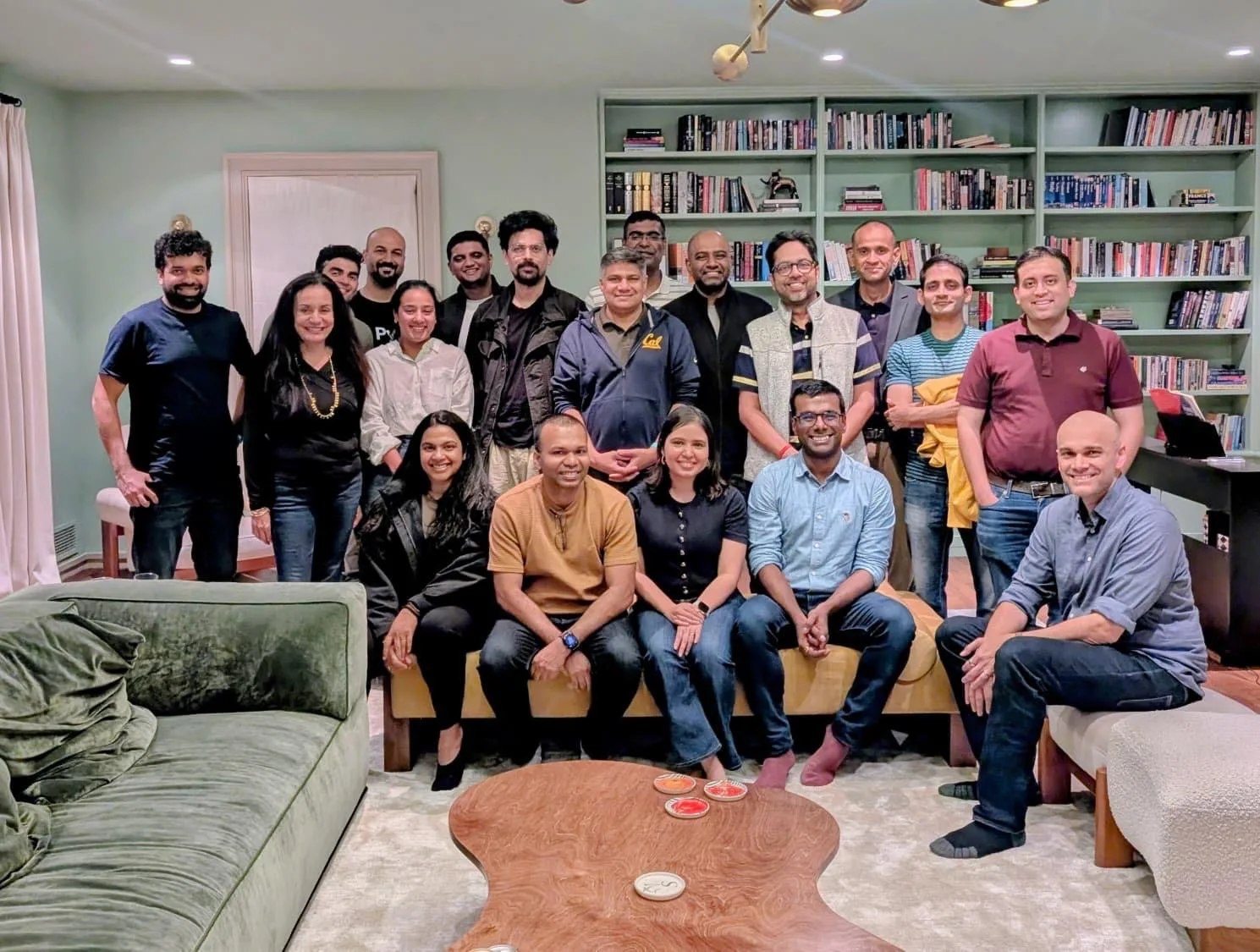
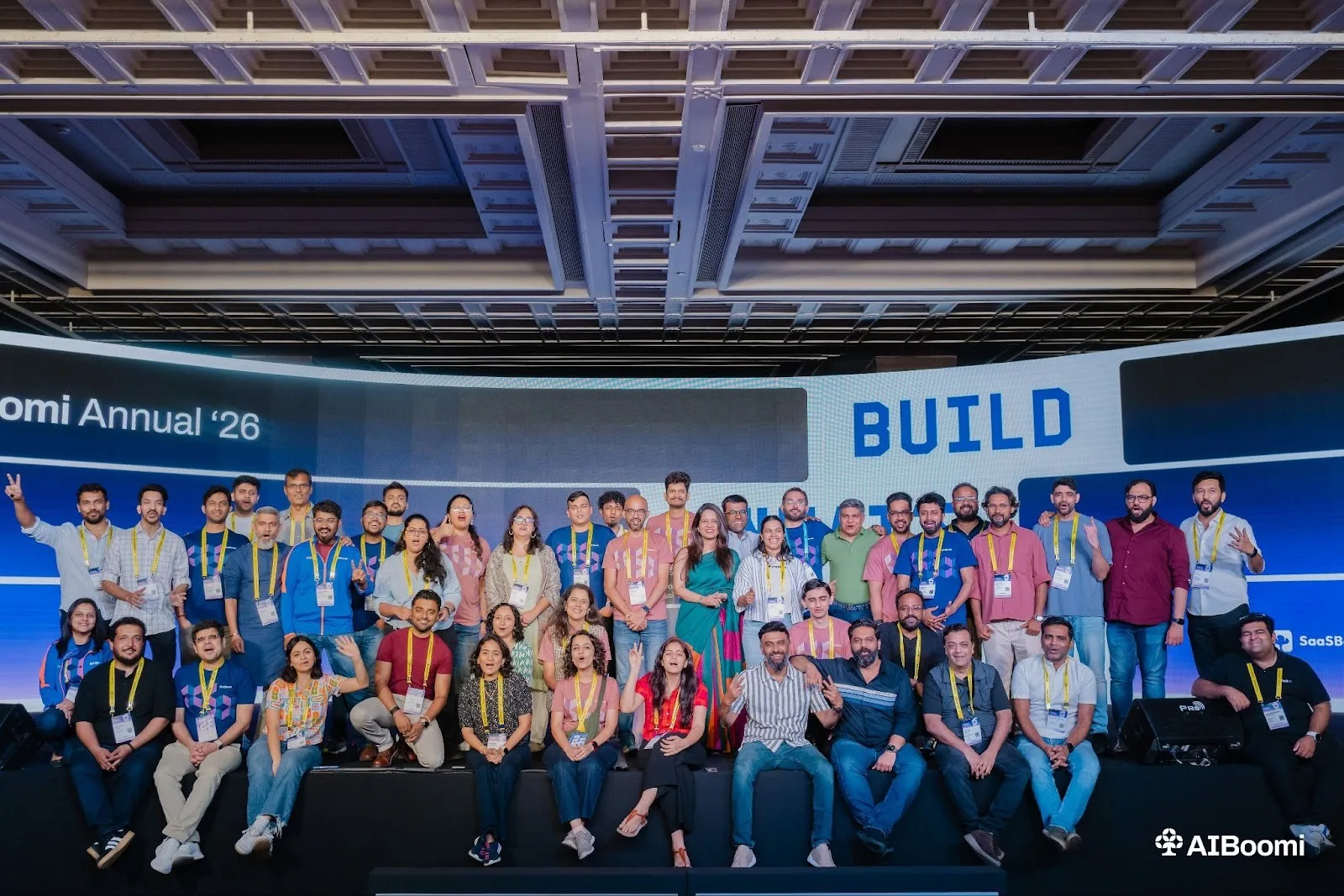
The volunteers at Annual ’26 were founders, product leaders, operators — people running their own companies, accountable to their own teams and boards. And yet, for months before the event, they showed up. Planning calls, late-night messages, logistics, coordination. On-ground, they were everywhere — humble, present, solving problems before anyone even noticed them.
Eighty-plus volunteers. Sixty-plus different companies represented. And the thing that stood out wasn’t the effort — it was the ownership. Everyone cared. About the program, about the registrations, about the attendee experience, about every small detail. There was no hierarchy in how that care was distributed.
Someone asked me, “What do volunteers get out of this?” I used to answer that question with “They’re paying it forward”. And that’s true. But after this Annual, I think the more honest answer is: they get to belong. To something real, something bigger than a Slack group or a LinkedIn connection. You can’t design that kind of spirit. People have to feel it.
What I’m taking away
I went to AIBoomi Annual ’26 carrying a lot of curiosity and very few expectations. I came back with something harder to name.
Part of it is clarity. About where the Indian AI ecosystem actually is — not where the headlines say it is. A room of ambitious, globally minded, early-to-growth stage builders, hungry for practical playbooks and honest pattern recognition from people who’ve been through it.
Part of it is gratitude. For Avinash, who took a chance on someone who showed up with a cold message and a willingness to contribute to this amazing community. For the fellow volunteers who made the chaos feel purposeful. For the founders who shared their failures as openly as their wins.
And part of it is something I didn’t expect — a sense of belonging. I’ve always believed that some things can’t be bought: belief, care, a genuine sense of connection. I thought you only found those in families or close friendships. This community showed me otherwise.
AIBoomi is evolving. The conversations are changing. The pace is faster, the stakes are higher, the uncertainty is real. But the heart of this community — the willingness to show up for each other, to share openly, to build together — that hasn’t changed.
And maybe that’s the part that matters most.