

// Tagged with Advantage India
A 14-year-old in a small hospital in Bihar was dying.
Oxygen levels dropping. Breathing harder, faster, then barely at all. The local ICU team had never performed prone ventilation – flipping a patient face-down to help damaged lungs work better.
They had never needed to. Until now.
Two hundred kilometers away in Bangalore, a remote intensivist watched the video feed and talked the team through it.
Position the patient. Adjust the ventilator settings. Monitor the oxygen saturation. The guidance was specific, real-time, urgent.
The kid survived.
That case happened during COVID, but the underlying problem existed long before the pandemic and persists today.
India has 300,000 ICU beds and 5,000 trained intensivists.
The math doesn’t work.
Patients die in tier-2 and tier-3 cities from treatable conditions because no one with critical care training is available to manage ventilator settings, detect early infections, or handle fluid management.
Most healthcare innovation flows from rich countries to poor ones.
An ambitious startup called Cloudphysician is reversing the direction – building an India-first model to export back to America.
Dhruv Joshi and Dileep Raman watched this problem from the Cleveland Clinic, where they had completed fellowships in pulmonary and critical care.
They saw the best modern medicine could offer.
They also knew that model – innovation-focused, research-heavy, capital-intensive – couldn’t be replicated in every Indian district.
Too expensive. Too resource-intensive. Impossible to scale.
So they came back in 2015 and did something most founders skip: they spent 18 months not building anything!
What 100 Hospital Visits Taught Them That Medical School Didn’t
Instead, they traveled.
Visited about 100 ICUs across tier-2 and tier-3 cities.
Talked to doctors, nurses, and hospital administrators.
Watched what actually happened when critically ill patients needed care and expertise wasn’t available.
The intensivist shortage was obvious walking in.
What wasn’t obvious was that missing doctors were only part of the breakdown.
Quality nursing was equally lacking. Documentation practices were poor. Protocols didn’t exist. Bedside staff had varying levels of training. Medical equipment sat unused because no one knew how to operate it properly.
The entire critical care ecosystem was missing, not just the doctors.
“If we’d just built a telemedicine platform connecting hospitals to remote doctors, it would have failed,” Joshi said. “The bedside teams wouldn’t have known how to execute the remote doctor’s orders properly.”
They realized they needed a full-stack solution – not just connecting doctors, but training nurses, digitizing workflows, providing clinical decision support, creating protocols that worked when you don’t have reliable oxygen supply or backup generators.
There was one other critical insight: technology interfaces had to be dead simple.
At Cleveland Clinic, sophisticated systems required extensive training. In a hospital in Bihar with staff turnover and limited tech exposure, that assumption breaks. One-click to call for help. Clear visual indicators. Minimal typing required.
They also learned most existing platforms weren’t interconnected. Hospitals had cameras from one vendor, monitoring systems from another. Nothing talked to each other.
They decided to build RADAR as an integrated platform from day one rather than stitching together existing solutions.
The 18-month delay upfront saved them years of building the wrong thing.
They Started as Operators, Not AI Builders
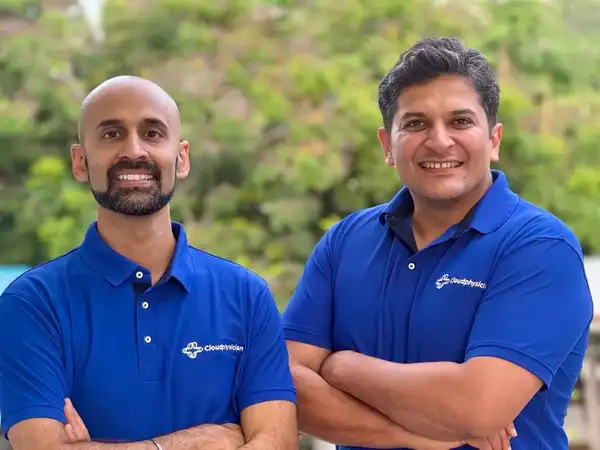
Cloudphysician did not launch as an AI company.
It launched in 2017 as a tele-ICU operations company delivering actual clinical care to real patients with human intensivists.
This decision shaped everything that came after.
Every patient they managed generated data. Continuous video feeds from high-definition cameras. Vitals monitored in real-time. Lab results. Medical records. Clinical interventions. Outcomes. But more importantly – clinician annotations, because their intensivists were actively using this data to make treatment decisions.
By 2020, before they built serious AI models, they had tracked 2.5 million vital signs, 150,000 lab results, around 15,000 images across nearly 200 ICU beds and 10,000+ patients.
Most healthcare AI startups build backwards.
They develop models first, then struggle to get quality training data. Or they use publicly available datasets that don’t reflect the specific chaos of actual ICU care.
Cloudphysician had something better: proprietary, multimodal medical-grade data from diverse settings. Cancer hospitals. Community hospitals. Neonatal ICUs. Adult ICUs. Tier-2 cities. Tier-3 towns. Different patient populations. Different disease severities.
The AI became clinically useful around 2022-2023. Computer vision models could reliably detect disconnected tubes, bed rails down, signs of patient restlessness, abnormal breathing patterns. Multimodal models integrating video, audio, and medical records could flag early infection risks with enough accuracy that intensivists trusted them.
“We were not building predictive AI to tell us who would get worse,” Raman explained. “We were building analytical AI to help our intensivists see what’s happening right now across multiple patients simultaneously.”
The difference matters. Prediction is hard and often wrong. Analysis of the current state – that is what makes intensivists more efficient without replacing their judgment.
For every 10 patients in a Cloudphysician Smart-ICU, up to 4 more survive compared to traditional care.
This is why the company exists.
COVID Exposed They’d Built the Right Foundation
When the pandemic hit, Cloudphysician went from 200 beds to targeting 1,000 beds in months.
Most telemedicine companies that surged during COVID struggled after. Cloudphysician kept growing.
Their difference was unlike many of their peers, they were not selling convenience.
Video consultations for routine care became less attractive once people could visit doctors in person again. But Cloudphysician was solving a structural problem. The ratio of ICU beds to trained intensivists doesn’t change based on pandemic conditions.
Hospitals that saw 40-47% reductions in ICU mortality rates during COVID kept working with them after COVID.
Those results matter regardless of whether there’s a pandemic. The ones that just needed temporary surge capacity went away.
By 2024, they were at 1,500+ ICU beds across 200+ hospitals. Well above pre-COVID levels. Not pandemic-driven demand. Hospitals seeing value and asking for more.
That growth validated something they had learned during the 18-month research phase: in healthcare, trust beats technology.
Hospitals don’t adopt systems because the AI is clever. They adopt systems because outcomes improve and their doctors trust the process.
Three Decisions That Made It Work
1. They’d rather save lives than optimize spreadsheets
One intensivist managing 6-8x more patients than traditional ICU care sounds like a math optimization problem. It’s a safety constraint.
They figured out that ratio through trial and error in their first year. Initially, they thought maybe 3-4x would be the limit. But as they built better tools into RADAR and their intensivists gained experience with virtual care, they realized they could safely handle more.
The 6-8x works because of system design.
Traditional ICU doctors spend time on physical rounds, moving between beds, waiting for information, dealing with documentation. Cloudphysician intensivists have all information digitally in real-time. They review multiple patients efficiently and focus attention where it’s needed most.
RADAR does continuous monitoring and flags issues automatically. Oxygen saturation drops or breathing pattern changes, the system alerts immediately. Doctors manage more stable patients while being instantly notified when someone needs urgent attention.
What breaks at 10x: response time and cognitive load. Push the ratio too far and three simultaneous crashes means someone dies because you can’t give each patient the attention they need.
They also learned acuity matters more than raw numbers. One intensivist can manage more beds if most patients are lower acuity post-op cases versus all being high-acuity sepsis or respiratory failure. They do dynamic load balancing – adjusting coverage based on patient complexity.
The upper limit is around 8-10x for general ICUs, maybe 5-6x for high-acuity cases like cancer ICUs. They’re conservative. They’re not trying to maximize the ratio. They’re trying to maximize outcomes.
2. They built a healthcare company that happens to use tech
About 140 clinical staff. 40 tech staff. Most healthtech companies are the reverse.
This wasn’t an accident or a phase they had to optimize away later. Clinical expertise is the product. Technology is what lets them scale it.
The ratio comes from the math of their model. Each hospital needs 24/7 intensivist coverage. That requires multiple intensivists per hospital in shifts, plus nurses at their command center handling routine monitoring and communication. As they scale to 200+ hospitals, the clinical team grows proportionally.
The tech team of 40 is substantial – building and maintaining RADAR, integrating with hospital systems, developing AI models, managing infrastructure. But they’re building tools for the clinical team to use, not replacing the clinical team.
Their clinicians aren’t “cost centers.” They’re the core product. The tech team’s job is to make each clinician more effective, not to reduce the number of clinicians needed. They measure success by outcomes per patient, not revenue per employee.
The challenge is cultural. Engineers sometimes want to “solve” clinical work with more automation. But in high-stakes critical care, human judgment from a trained intensivist is irreplaceable. AI helps. AI doesn’t decide.
They actively work to help their tech team understand they’re building tools for doctors, not building doctors. Not every engineer is comfortable working in a clinically-driven environment where a doctor might override their algorithm, and that’s the right call.
But that’s the only way to build something that works when patient lives are on the line.
3. They turned skeptics into champions by letting results speak
The ICU head is typically their biggest blocker in sales. Doctors worry about being replaced.
The pitch is simple: “We’re here to help you take care of more patients better. You’re still the boss of your ICU.”
Cloudphysician intensivists work under the local doctor’s supervision. They provide 24/7 remote support, especially during nights and weekends when the ICU head can’t be physically present. They handle routine monitoring and documentation. They bring subspecialist expertise for tough cases.
The thing that works best is showing, not telling. They invite skeptical doctors to visit their command center in Bengaluru. They connect them with ICU heads at hospitals already using the system.
One ICU head in Bihar was extremely resistant initially. He felt they were questioning his competence. Their approach: frame it as capacity building for his team, not replacing his expertise.
They offered a trial. During that trial, the 14-year-old came in with severe respiratory failure. The remote intensivist guided his team through prone ventilation and advanced respiratory support techniques they hadn’t used before. The patient survived.
After that case, he became one of their strongest champions. He realized they weren’t there to make him look bad. They were there to help him save patients he’d otherwise lose or have to transfer to a metro hospital hours away.
Now he actively teaches his team the techniques they’ve learned from working with Cloudphysician. He’s referred other hospitals to them. The conversion happened not through persuasion but through one saved life.
When India-First AI Goes Global
Cloudphysician is expanding to the US market where the tele-ICU model already exists. Their advantage: they had to solve harder problems with fewer resources, which forced them to build better technology.
In the US, tele-ICU exists, but most models are expensive and still require significant onsite staffing. Cloudphysician built a model in India where hospitals often have less infrastructure, less trained staff, more resource constraints.
That forced them to build AI that actually works – computer vision that compensates for less experienced bedside nurses, clinical decision support that guides care teams with varying skill levels, interfaces simple enough for anyone to use.
The other advantage is cost. They can provide US board-certified intensivists and nurses working from India at a fraction of what US-based services cost. They are not compromising quality – their founders are US-trained, their clinical team includes US-certified staff – but operating costs are lower.
They are also entering with proven AI capabilities that most US tele-ICU companies are still building. RADAR has been processing millions of patient data points for years. The models are mature, tested across diverse patient populations, deployed at scale.
The US expansion strategy focuses on “virtual nursing” – supporting bedside nurses with 24/7 remote assistance. US hospitals are desperate for nursing support. Cloudphysician can provide skilled nurses from India who augment the bedside team via their technology platform.
They’re not trying to replace US tele-ICU companies overnight. They’re targeting underserved segments – community hospitals, rural facilities, places that can’t afford premium domestic services but still need quality critical care support.
The proof point will be outcomes. If they can show 40% mortality reduction in US ICUs the way they have in India, the market will pay attention.
The Next Cleveland Clinic Might Run From Bengaluru
There is no question whether remote intensivists work. The 40% mortality reduction proves they do.
The question is whether India can export healthcare delivery models the same way it exported software engineering.
Cloudphysician is building toward that.
They’re targeting 10% of India’s 50,000 hospitals while expanding to the US, Middle East, and Southeast Asia. In 2024, they raised $10.5M Series A from Peak XV Partners to accelerate that expansion.
That ambition rests on something they learned during those 100 hospital visits in 2015-2016: the problem of missing clinical expertise isn’t unique to India. It’s global.
Resource constraints force innovation. Sometimes the best solutions come from solving the hardest version of the problem first.
If Cloudphysician succeeds, the next Cleveland Clinic might run its ICUs from Bengaluru. Not only because it’s cheaper. Because between AI-augmented remote intensivists, continuous monitoring, and evidence-based protocols delivered 24/7, it might actually be better.
Dhruv Joshi and Dileep Raman left prestigious positions at Cleveland Clinic to spend 18 months visiting Indian hospitals. They learned the problem wasn’t what they thought. They built the AI after they earned the trust and collected the data. And they put doctors at the center of a tech company because that’s what works when a 14-year-old in Bihar needs prone ventilation and the local team has never done it before.
The kid survived. The difference it made to that child’s life is not a metric. That is the mission of Cloudphysician.
// Tagged with Advantage India