
// Tagged with AI-first Entrepreneurs
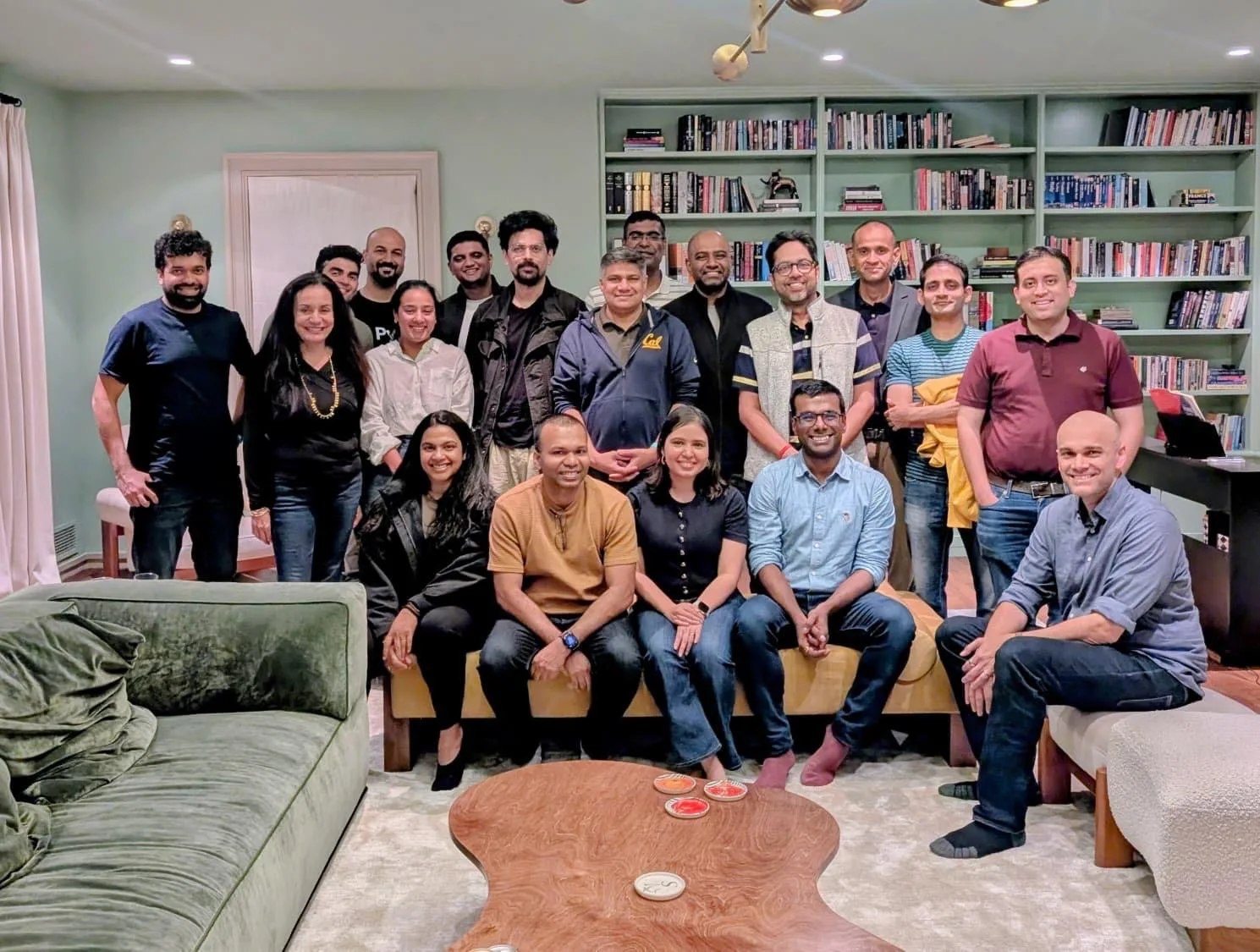
We didn’t plan to build a bootcamp, just a small catch-up with 15–20 founders in the Bay Area, comparing notes on what was actually working in AI in 2026. No agenda. No speakers. Just people who were building through the same uncertainty, being honest with each other over food.
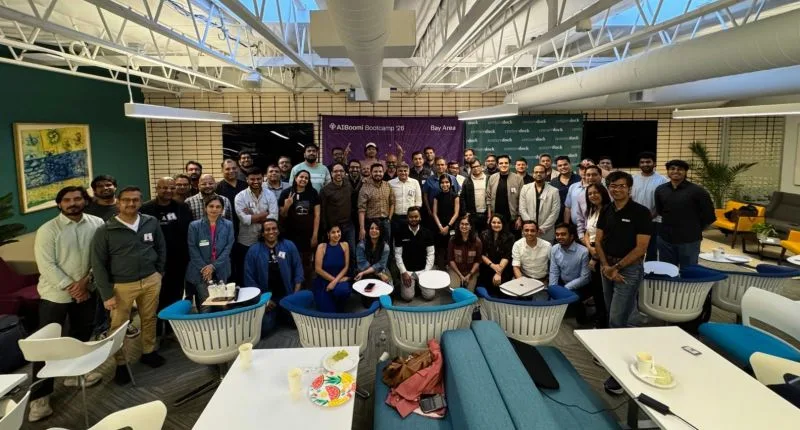
That catch-up had 60–70 founders. It got a format, a name, two days of sessions, and feedback that came back with zero detractors.
We still can’t fully explain how it happened that fast.
But we know why it worked. And that’s what we want to share before we do it again this time in Hyderabad, on July 3–4.
The thing nobody was saying out loud
When we started talking to founders in the run-up to the Bay Area, we kept hearing variations of the same story.
The product works. Customers are using it. Someone important has said “this is going to be big.” Revenue is real, maybe not a lot of it, but real. There’s genuine pull.
And then, in the same breath: I don’t know why I win deals. I can’t replicate the last customer without doing everything myself. Nothing is compounding. I feel like I’m one or two decisions away from clarity but I don’t know which decisions.
This wasn’t a startup problem. It wasn’t an AI problem. It was a specific, identifiable gap that almost every founder in the room was living inside and almost nobody was naming it directly.
You have customers. You just don’t have company yet.
That gap between first revenue and repeatable, scalable models is where most AI founders are sitting right now. And it turns out it’s a surprisingly lonely place, because on the outside everything looks like it’s working. You can’t complain about it on a podcast. You can’t post about it on LinkedIn. You have to keep performing momentum while quietly carrying the weight of not knowing what comes next.
The thing we didn’t fully anticipate about the Bay Area was how much relief founders felt just from being in a room where someone finally said this out loud.
What actually happened in Bay Area
Our original instinct was to build something that looked like a traditional founder event. Polished speakers. Clean agenda. Sessions that people could screenshot and share. We scrapped most of it.
Not because the speakers weren’t good, they were exceptional. But because the most valuable thing we could build wasn’t a stage. It was a room where the bar for honesty was high enough that founders would say what’s actually happening in their company, not the fundraising-ready version of it.
That required a few specific choices.
- We kept it small on purpose. 60–70 founders is large enough to have diverse perspectives in the room
- We made Chatham House rules the default. Not a disclaimer at the top of a slide an actual operating principle. What’s said in the room stays in the room.
- We picked session managers, not moderators. Every session had someone from our team whose job wasn’t logistics
- We built an unconference. Saturday afternoon, 75 minutes, topics crowd-sourced on the day. No pre-set agenda. No speakers.
- We ended with commitments, not inspiration. The bootcamp closed with one question every founder answered out loud: what are you going back to do differently?
That last part matters more than it sounds. There’s a specific kind of clarity that comes from having to say something out loud to people who’ll remember it. It converts “I think I should probably…” into “I am going to.”
The sessions were strong. Ashwin’s opening on moats by segment set the intellectual tone for everything that followed it gave the room a shared language for the hard question underneath most of the GTM and product conversations: what do you actually have that holds when the frontier moves again?
But what made Bay Area work wasn’t the sessions. It was the conversations around them.
The questions that kept surfacing weren’t abstract:
- How do you pick your first enterprise customer when everyone looks like a fit?
- What does founder-led sales look like when you can’t clone yourself and you need to start building a team?
- When does your customer’s internal build-vs-buy decision become your actual biggest competitor?
- How much of the traditional SaaS playbook do you throw away when you’re building AI-native?
That’s the thing about a room where the bar for honesty is high. The quality of the question changes. You stop asking the question you’re comfortable asking and start asking the one you actually need answered.
Why Hyderabad, and why now
We live and work in India. Most of us are building from India, for a global market.
And the honest truth is that the AI founder conversation in India has been happening at two extremes: either very early-stage ideation (“we’re exploring what’s possible with AI”) or very late-stage (“here’s our Series B thesis”). The messy middle founders with real traction who are figuring out how to build a scalable company around it have been underserved.
The format is the same as in the Bay Area. The intent is the same. But the problems will be different in interesting ways. The GTM motion for an India-based founder going upmarket into enterprise India is different from the motion for going into the US. The distribution levers are different. The hiring market is different. The funding environment is different.
Those differences are features, not bugs. They make the peer learning in the room richer.
July 3 – 4. Two days. The same format that produced zero detractors in the Bay Area. Carried into a city that we think is ready for exactly this conversation.
Who this is built for
One thing we learned from the Bay Area: the quality of the room is determined by the quality of the selection. Not exclusivity for its own sake, genuine curation for fit.
This bootcamp is built for founders who have something real and are stuck in the gap. Not exploring. Not ideating. Building with customers, with revenue, with real decisions to make about what comes next.
If you’re in the $100K – $2M ARR range, or pre-revenue but moving with clear market evidence, and you’re wrestling with any of: why you win deals and how to win them again, what your GTM motion actually is versus what you think it is, how to sell outcomes instead of features, whether to go upmarket or go deeper, what your moat is as models improve this room was built for your current chapter.
A note on what we’re trying to build
AIBoomi isn’t a conference company. It’s not trying to become one.
What we’re trying to build is something harder and more specific: a community of AI founders in India who are genuinely helping each other get better at building companies, not just building products.
The bootcamp is one expression of that. The Bay Area edition was the first test of whether the format worked. Hyderabad is the second.
If it goes the way we think it will, you’ll leave on July 4th with something specific you’re doing differently on July 5th. Not inspired. Not motivated. Decided.
That’s the only metric we’re actually optimizing for.
// Tagged with AI-first Entrepreneurs