
Why the next generation of software companies will compete on outcomes, trust and distribution, and not just features.
Software companies once gained leadership by solving customer problems, adding features and delivering better experiences. AI is disrupting that playbook: changing what products do, how they are built and sold, and where competitive advantage comes from.
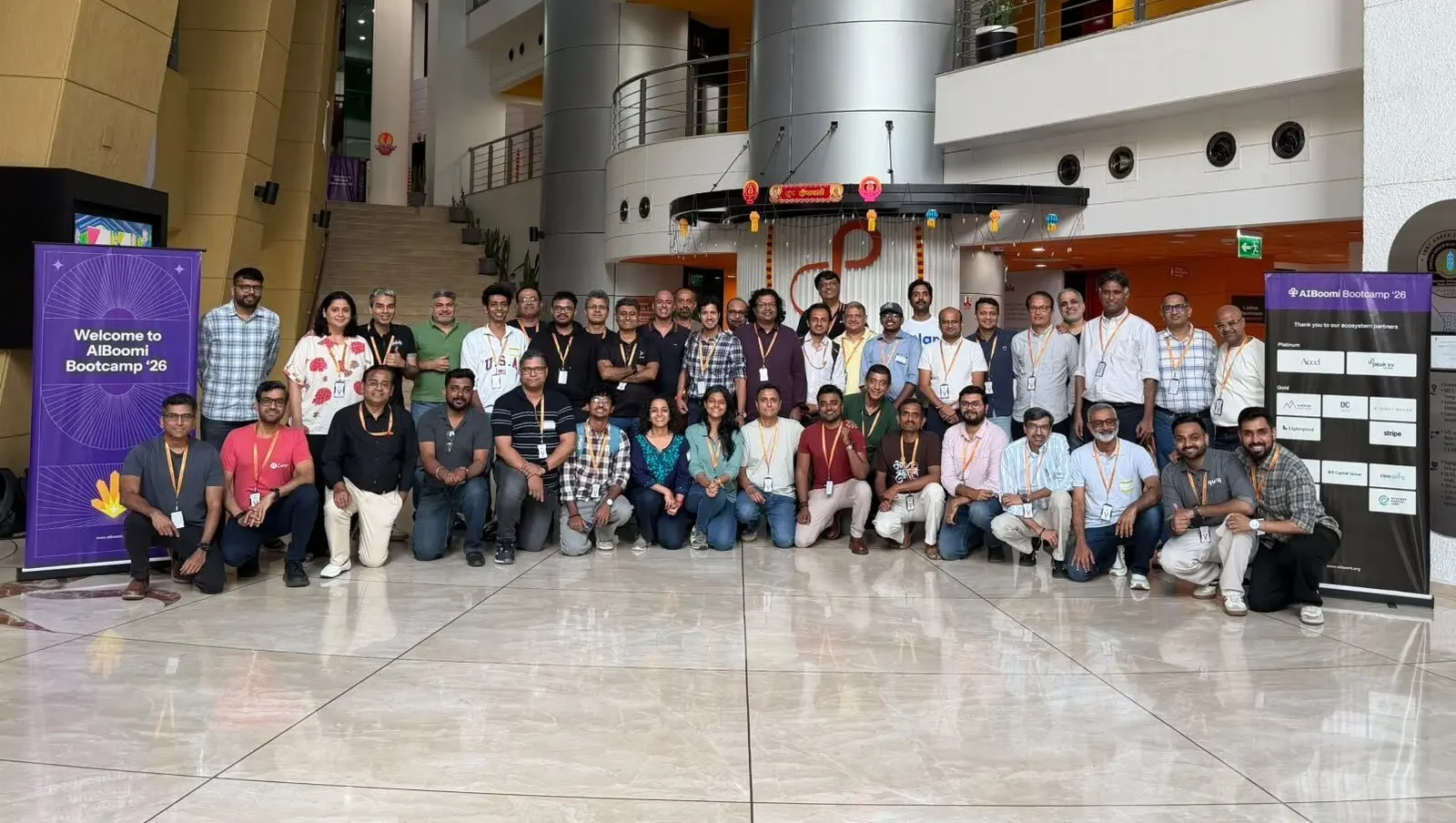
In a conversation with AIBoomi, Intercom co-founder Des Traynor shared lessons from the shift towards AI and the creation of Fin, its autonomous customer support agent. He emphasizes that AI is not simply another feature; it changes how software is built and delivered.
#1: AI isn’t just about making existing workflows faster; it’s about reimagining how work gets done.
When ChatGPT arrived in late 2022, Intercom began experimenting with large language models. The breakthrough was about accessing LLM capabilities through APIs and seamlessly integrating them into products
Intercom first used AI to improve workflows: rewriting messages, translating text and helping support agents respond faster. These features were only the beginning.
Instead of helping a support agent do the job better, could AI do the job? That’s the question that led to the bigger opportunity, the Fin launch. Rather than acting as a writing assistant, Fin was designed to resolve customer enquiries independently. One approach improves employee productivity; the other changes how the work gets done.
#2: AI’s competitive advantage isn’t just the intelligence of the model, but the reliability, consistency and trust built around it
An impressive model is not a dependable product by itself. In customer support, answers must be correct, consistent and policy-compliant. The system must also know when to hand a conversation to a human.
Intercom built a system around the underlying model, combining company knowledge, retrieval, guardrails and escalation paths. The aim was to make Fin reliable in real customer situations, not merely sound convincing in a demonstration.
Access to a powerful model is becoming less distinctive. Value lies in the system around it – and whether customers can trust it. AI must work across customers, industries and use cases. If every implementation needs extensive custom work, the business resembles a consultancy more than a scalable software company.
#3: Building with AI requires a different approach. Build around what AI can reliably do, not what you imagine it can do, and continuously measure and improve its performance.
Traditional development often starts with a product idea, then design and engineering follows. AI development can start by testing what the technology can reliably do, measuring performance and defining limits. The product is built around what has been proven.
Evaluation is essential: teams need a clear definition of a good answer and a disciplined way to measure improvement. Much of the work happens behind the scenes, in retrieval, accuracy and infrastructure. Of which the customer is blissfully unaware. They only see the improvement in experience.
The transformation is organisational, too. Intercom had to support its existing business while shifting attention and talent towards AI. Leaders needed to value teams maintaining established products while making the company’s future direction clear. Engineering and AI teams are also moving closer to strategic product decisions, as technical capabilities increasingly shape what can be built reliably.
#4: Sell outcomes, not features – AI wins by demonstrating measurable business impact, not just showcasing technology or functionality.
When AI performs work rather than simply providing another tool, the sales conversation changes. Traditional software buyers may compare interfaces, workflows and features. AI buyers want evidence: what work will be completed, how reliably, and what return will it deliver?
Buyers want evidence such as resolution rates, time saved and cost per task. Operations and finance leaders therefore become more involved in purchasing decisions.
Conventional software competes for technology budgets. AI that performs work may compete for labour budgets as well. Customers compare its cost with hiring, training and managing people. The strongest proposition is not what the product can do, but the business result it delivers.
#5: As software becomes easier to replicate, lasting competitive advantage lies in distribution, customer trust, proprietary data and deep domain expertise
AI is making interfaces, features and workflows easier to replicate. Traynor challenged founders to test their own defensibility: give someone screenshots and product documentation, then see how closely an AI coding tool can recreate an approximation of the product.
If the product can be copied, advantage may lie in distribution, brand, customer trust, proprietary data, domain expertise, relationships and specialist or regulatory knowledge – assets harder to replicate than an interface.
It is a critical question for every software company: assume competitors can copy your features. What do you have that they cannot easily copy?
#6: Meet customers where they work – embed AI into existing workflows rather than making them adopt yet another application.
Software companies traditionally built destinations – applications users had to open and learn. AI can instead deliver value inside tools people already use: service platforms, CRM systems, collaboration tools, email and messaging.
Fin’s early growth illustrates the importance of distribution. Its first $30 – 40 million in revenue came largely from Intercom help desk customers. Expanding to platforms such as Zendesk and Salesforce Service Cloud, and later HubSpot and Freshworks, widened the market it could reach.
The insight is simple: do not make customers change their habits just to access your AI. Put the capability where the work already happens. In an AI-first world, distribution may matter more than the destination.
#7: Price AI based on the value it delivers, and focus engineering resources on what truly differentiates your business; buy the rest.
Pricing AI is difficult because outcomes can be hard to define. A conversation may not be fully resolved, yet AI may have answered several questions and saved human effort. Traynor suggests pricing against a measurable proxy for work and quality, such as successful interactions or productive minutes.
He also offered a pragmatic product principle: build what matters, buy the rest. AI may make it easier to create internal tools, but that does not automatically make building them the best use of engineering time. If a specialist vendor can serve many customers and keep improving a capability, buying may be a smarter decision.
The next software advantage – wrapping up
As AI lowers development costs and barriers to entry, competition is likely to intensify, and margins come under pressure. Technology alone will not protect a business.
The companies best placed to succeed will treat AI as a transformation of their operating model, not a feature upgrade. They will build around reliable outcomes, measure what matters, rethink how they sell and price, and invest in trust, expertise and distribution.
The future may belong less to applications people use, and more to intelligent systems doing useful work wherever it happens.