

India loves a leapfrog moment. And we are living inside one right now.
Mobile data. UPI. Aadhaar. Every time the world invents a platform, India might not be first, but we consistently end up being the biggest room in the building. The pattern is so predictable it almost feels scripted. Watching what is happening with AI, the script looks familiar again. Except this time, we aren’t just adopting. We are building.
Consider the baseline: India is already the second-largest AI market globally, with over 100 million people actively engaging with ChatGPT every week. Venture funding into the space nearly doubled last year, crossing the $1.3 billion mark. Globally, 1 in 5 of the top 100 AI companies has at least one Indian co-founder.
These aren’t vanity metrics. They are early proof that something real is forming. The wave is here. The question now is who rides it the farthest.
The Honest Read from the Ground
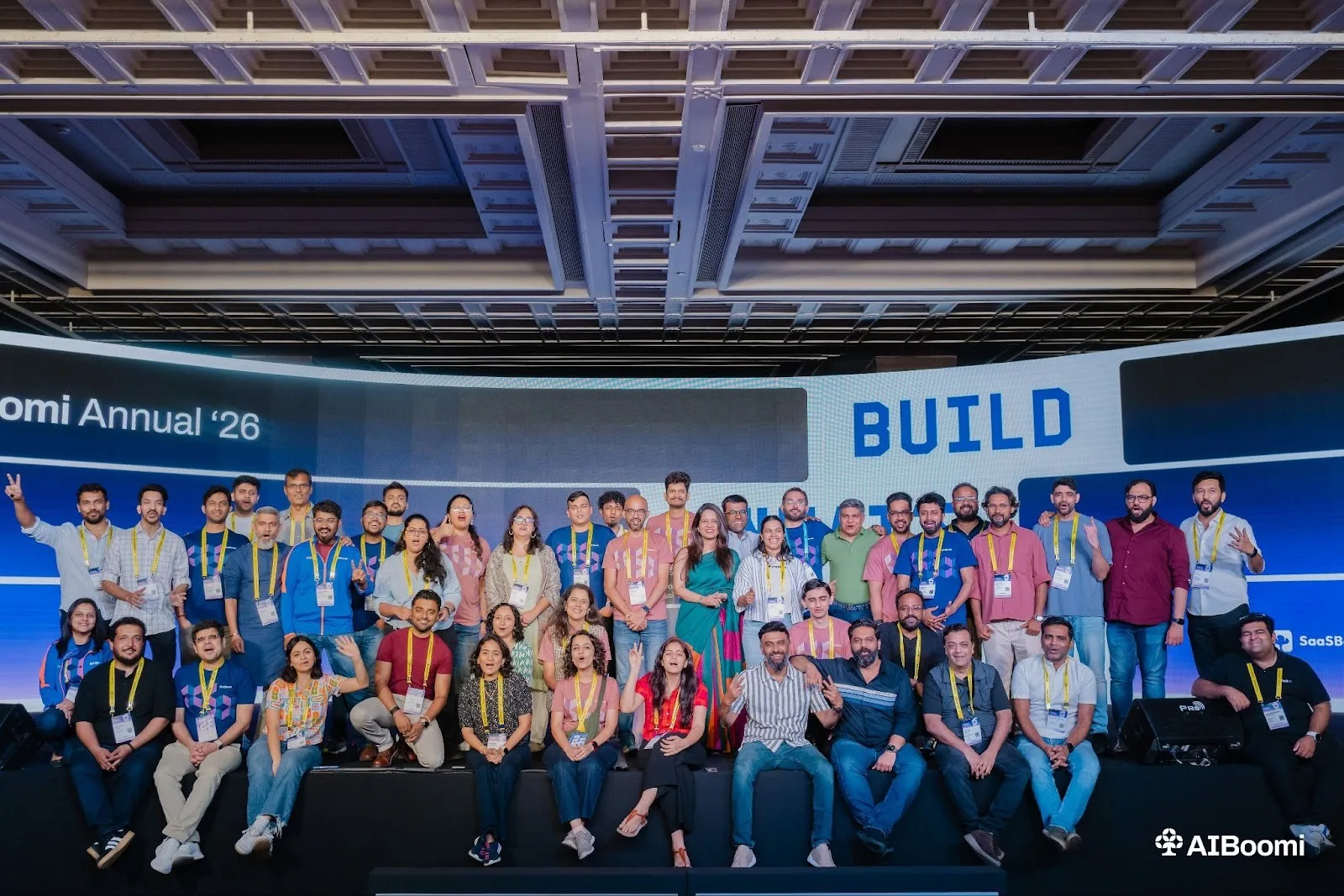
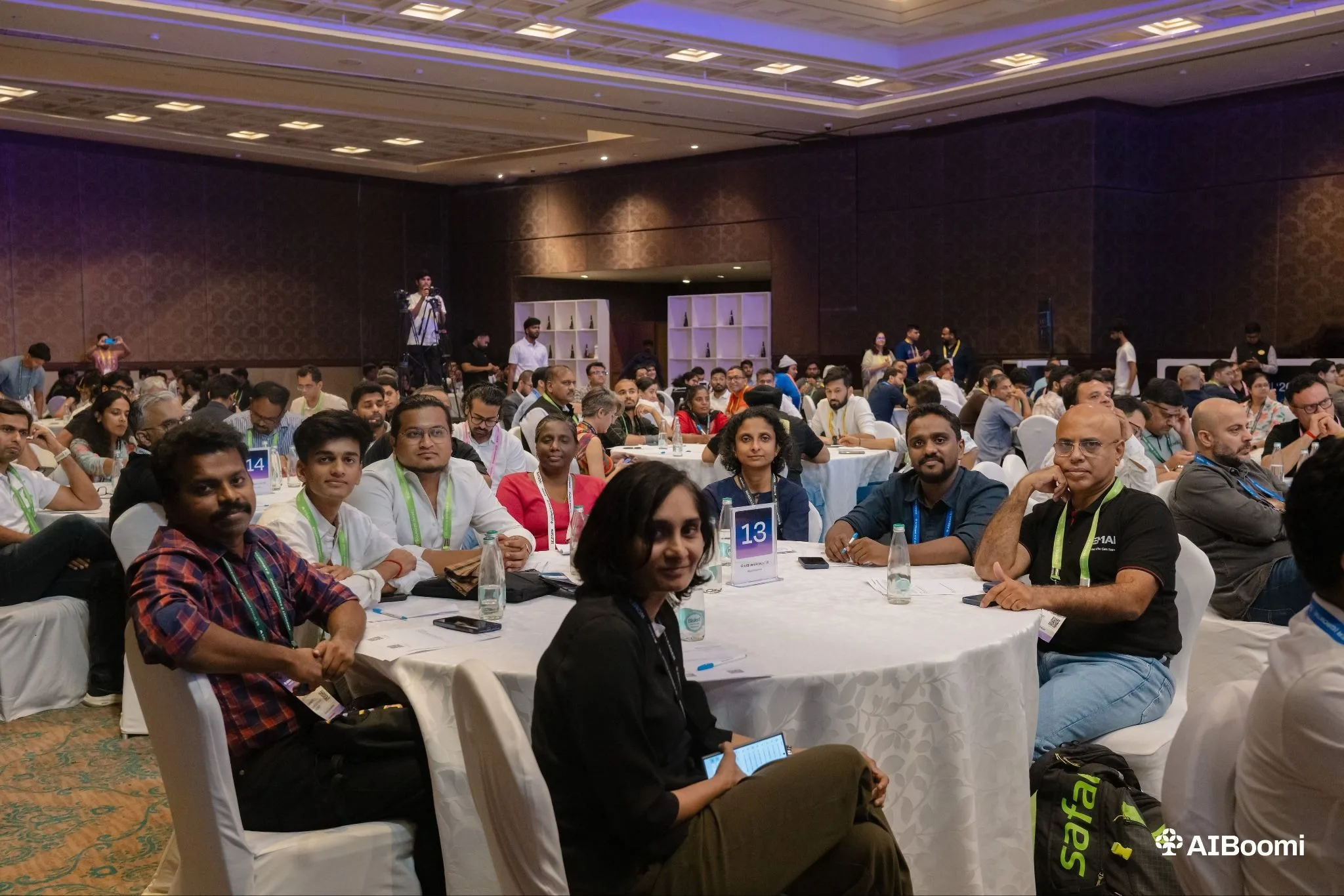
At the AIBoomi Annual’26 Unconference, we didn’t look at engineered surveys. We had over 200 founders in a room, voting live on how AI is actually playing out inside their companies right now.
The distribution was telling. Engineering and Coding captured nearly 4 in 10 of all AI impact votes. Product captured just over a quarter. Put them together, and two-thirds of all perceived AI value is currently locked up in just building things.
Sales? That captured a tiny 6% sliver of the room.
This is a classic “Day One” story. AI almost always enters through the engineering door first, just as the internet and cloud did before it. But what is exciting is that this community already knows which door to kick down next. When asked which function aggressively needs AI adoption, founders overwhelmingly pointed to Sales and GTM. The awareness is there. The urgency is there. The gap between where AI is today and where this ecosystem is pointing is exactly where the alpha lives.
The Blocker is Surprisingly Solvable
The number one obstacle founders cited for AI adoption wasn’t model reliability, security, or compute costs.
Almost a quarter of the room named identifying the right use case as their biggest hurdle.
While that sounds daunting, it is actually a massive signal of market maturity. The ecosystem is no longer debating whether to use AI; they are debating prioritization. They are looking for business cases. Enterprise customers don’t want more generic models — they want value engineering. They want to know which bets compound the fastest and deliver undeniable ROI.
The market doesn’t have a technology capability shortage. It has a judgment gap. And judgment gaps get filled faster than technology gaps.
The Three Wide-Open Opportunity Sets
For founders and investors paying attention, the next 24 months will reward those who target these specific vacuums:
- The GTM Adoption Chasm: Sales is one of the lowest-impact AI function today and the highest internal priority for tomorrow. The product that genuinely makes AI work for Indian B2B sales won’t just win a category; it will create one. Cracking the relationship-led, multi-stakeholder dynamics of Indian enterprise sales requires deep, outcome-based building that global generalist tools simply cannot replicate.
- Trust as Infrastructure: Hallucinations and reliability are keeping enterprise capital on the sidelines. Building the governance, safety, and trust layer isn’t just a feature — it is the next massive infrastructure wave. For founders building here right now, the lack of current scale capital isn’t a warning; it’s an invitation.
- The Use-Case Playbook: When a quarter of the market says they can’t pinpoint their top use case, they aren’t asking for another model or a flashier UI. They are asking for frameworks, evidence, and curation. Whoever builds the trusted playbook for AI adoption in Indian B2B will capture an audience that is both massive and deeply motivated.
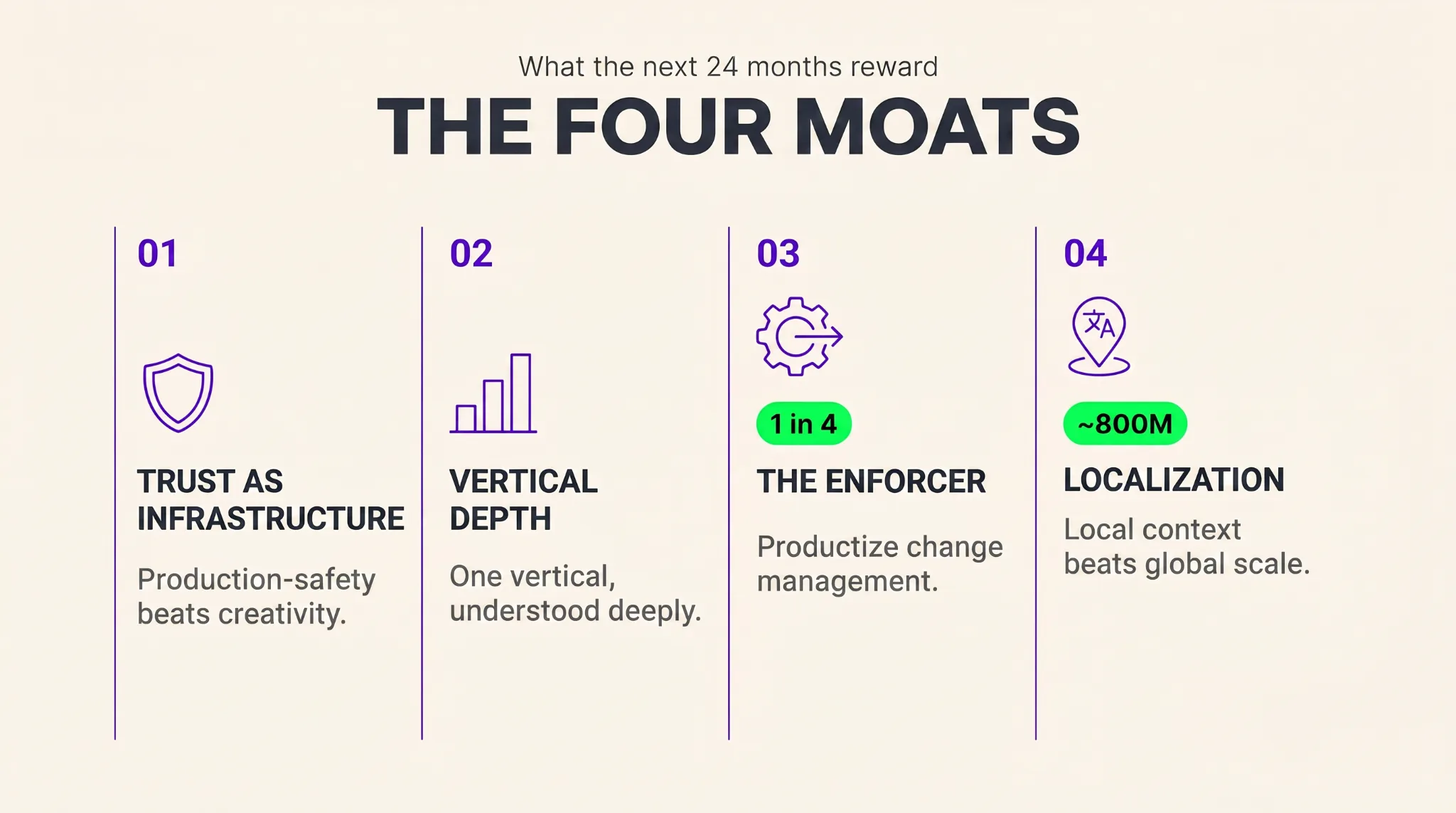
What the Next 24 Months Reward
The founders who win won’t simply be moving fast. They will be moving fast on the right things.
- The trust layer beats marginal capabilities. The tooling that makes AI production-safe and compliant will completely outlast the tooling that simply makes it a fraction more creative. Build for safety early.
- Verticalization beats horizontal ambition. A deep product for a single Indian B2B vertical beats a broad, generic platform every single time. The nuance of local enterprise procurement requires India-first thinking. That specificity isn’t a limitation; it’s a defensible moat that compounds over time.
- The “Enforcer” segment is wide open. Roughly 1 in 4 Indian enterprises currently operate under a top-down, board-level AI mandate but have absolutely zero execution capability. Nobody is designing for them yet. The founders who productize the change management layer alongside the technology will unlock a massive budget segment their competitors are completely overlooking.
- Localization is a structural advantage. A demographic of nearly 800 million non-English-first users, paired with a unique, decade-in-the-making regulatory stack, creates a natural barrier. Global platforms cannot easily buy their way past these friction points. Building India-first means building something genuinely protected.
The Bigger Picture
Reviewing over 150 open-text responses during Unconference, an electric convergence emerged without any coordination. Phrases like “speed is the new moat” and “build fast, ship now” were repeated constantly. Even more telling was the shared acknowledgement that “no playbooks exist”.
The disconnect between the roaring macro headlines and the gritty reality founders face on the ground isn’t a contradiction. It is the natural shape of a market transitioning from curiosity to deep workflow integration. That transition is where the real building happens. It is messy, uncertain, and exactly right for where India is in this journey.
The next chapter won’t be written by whoever has access to the most computing power or the largest models. It will be written by the deep operators who are already three moves ahead of the question.
Sources: AIBoomi Annual’26 Unconference survey (n=230, live polling); Z47 and OpenAI’s “The India AI Edge”, May 2026; Deloitte’s “State of AI in the Enterprise: India Insights”, April 2026 (n=200+); Elevation Capital’s “State of AI Adoption in Indian Startups 2026” (n=200+)