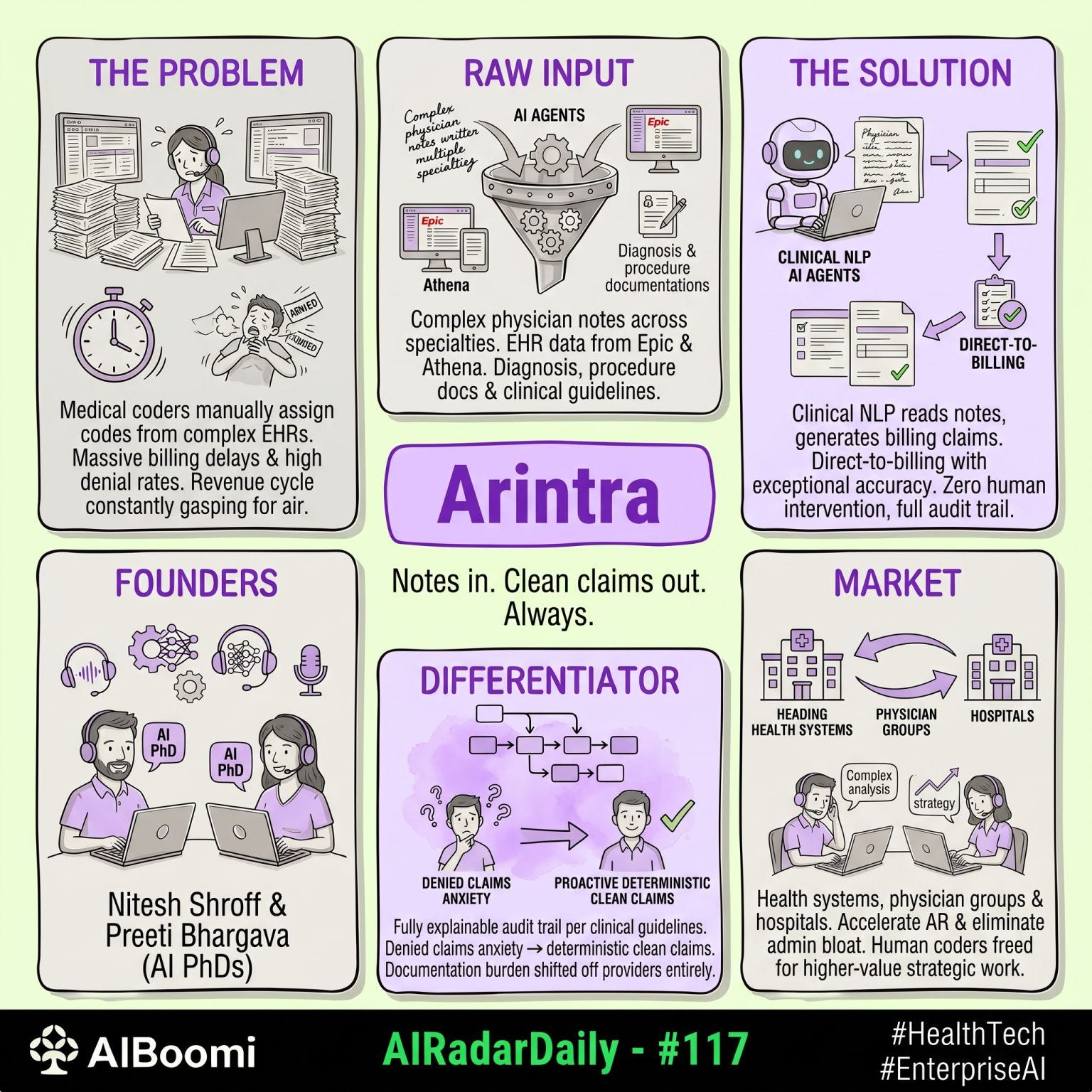
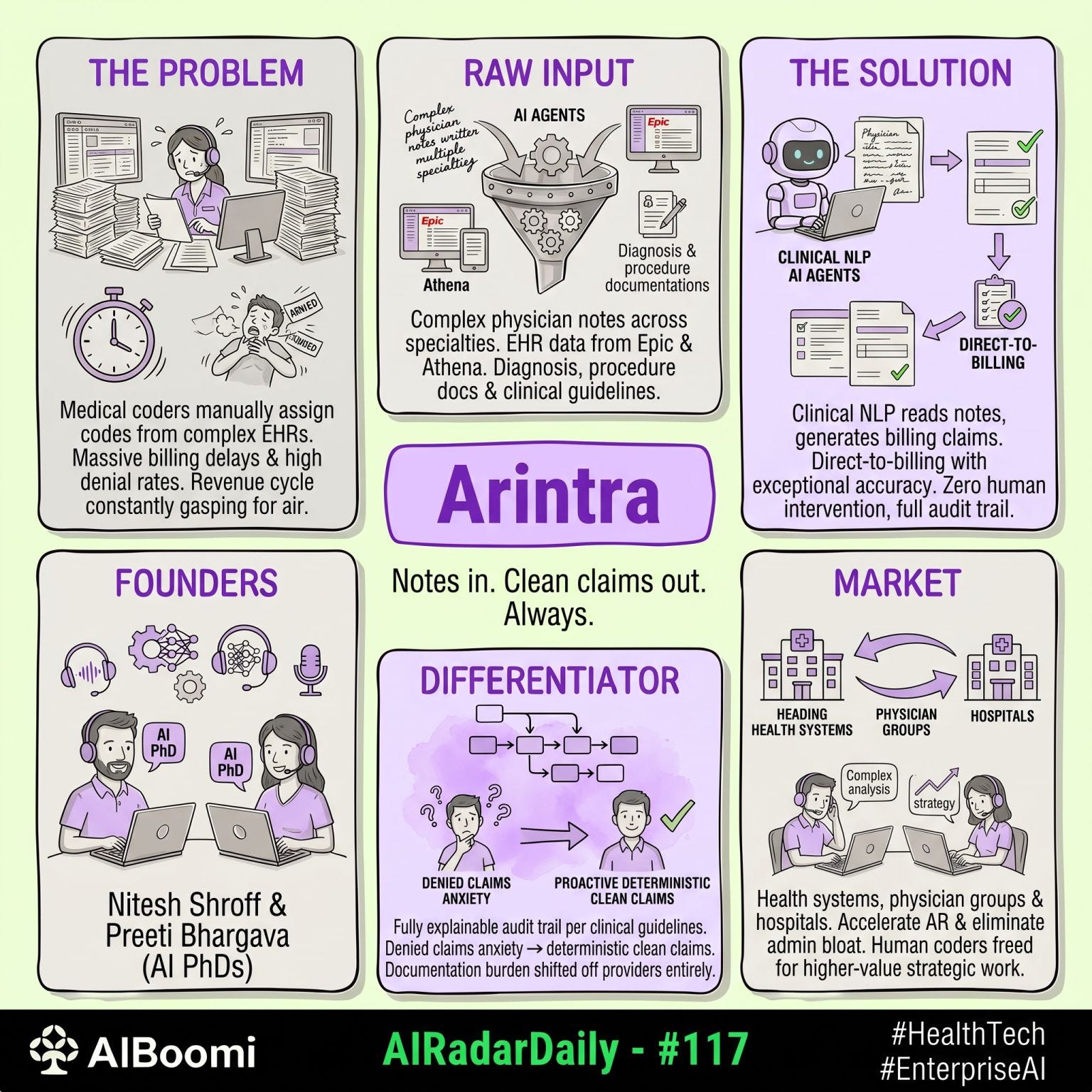
Every time a doctor finishes seeing a patient, a massive, invisible administrative machine kicks into gear. In the US healthcare system, translating clinical care into billing codes is a grueling, high-stakes process. We force highly trained medical coders to painstakingly sift through complex electronic health records, manually assigning codes for every diagnosis and procedure. When a system runs on sheer manual effort, the results are inevitable: massive billing delays, high denial rates, and a revenue cycle that constantly feels like it is gasping for air. We have taken brilliant clinicians and coders and buried them in administrative friction.
It takes builders with deep technical rigor to look at this overwhelming bottleneck and decide to solve it natively with AI. That is exactly what Nitesh Shroff and Preeti Bhargava, PhD are doing with Arintra.
Founded in 2020 by two AI PhDs with deep expertise in natural language processing and deep tech, the team is building a deeply intelligent, autonomous medical coding platform that fundamentally industrializes the revenue cycle.
The engineering under the hood is beautifully pragmatic. Arintra deploys clinical natural language processing that integrates seamlessly into major EHRs like Epic and Athena. It autonomously reads complex physician notes across multiple specialties — from urgent care to surgery — and instantly converts them into direct-to-billing insurance claims with exceptional accuracy, requiring zero human intervention.
The true moat here is uncompromising compliance and transparent reasoning. Arintra doesn’t just guess a billing code; it generates a fully explainable audit trail based on strict clinical guidelines. It replaces the retroactive anxiety of denied claims with a proactive, deterministic system that ensures clean claims from day one. It shifts the burden of documentation entirely off the provider’s shoulders.
The market? Leading health systems, physician groups, and hospitals desperate to accelerate their accounts receivable and eliminate administrative bloat. By reallocating human coders to higher-value, strategic work, Arintra gives healthcare organizations their margins and their momentum back.
Seeing founders of this caliber head-down, quietly architecting the heavy-duty infrastructure that makes healthcare viable in the real world is profoundly inspiring. They are ensuring that providers can focus entirely on patient care, leaving the complexity of the back office to the machines.
Let’s celebrate the builders.
w/ Jay Ingle