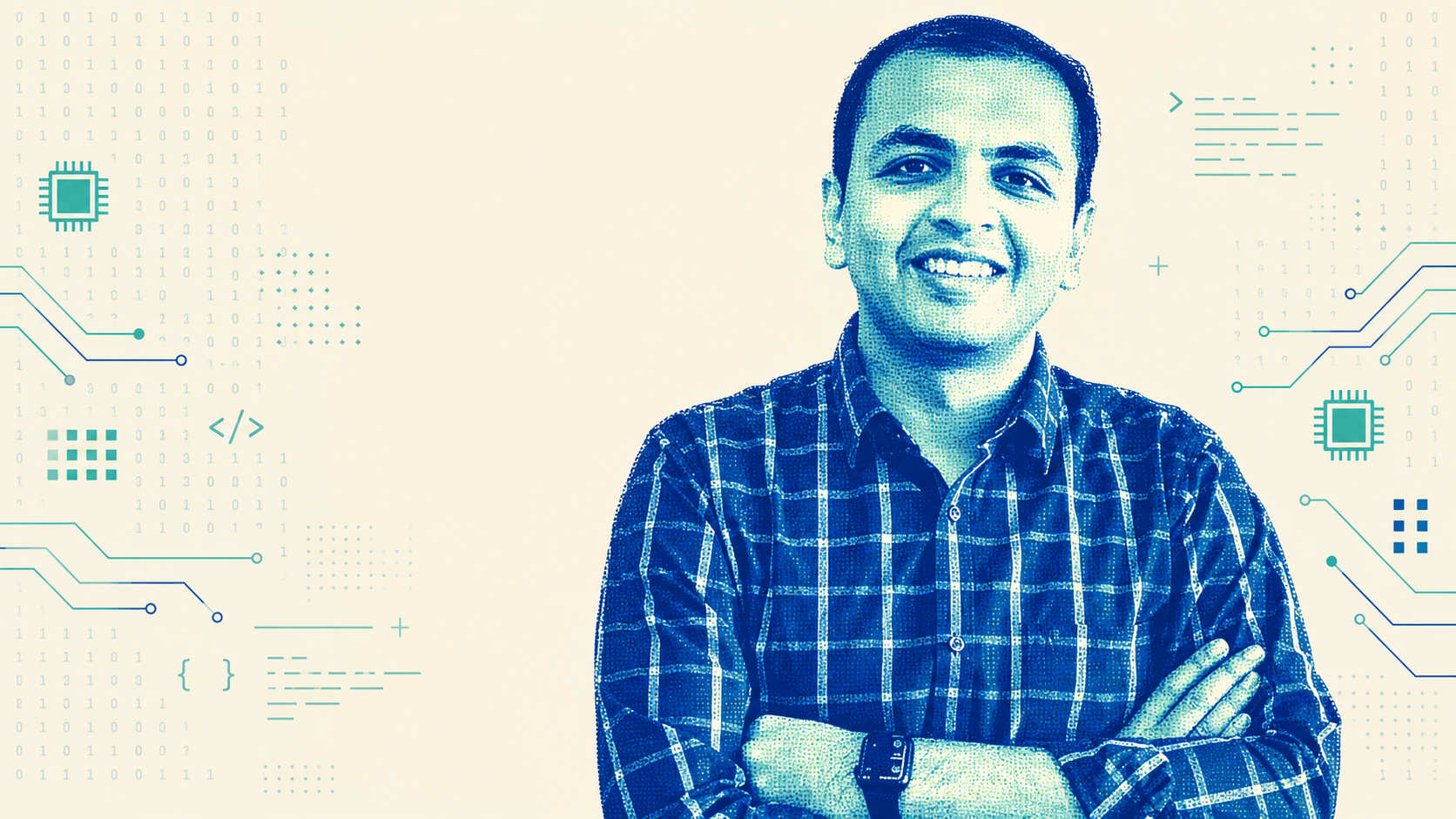
Dhruv Joshi built the company out of Bangalore and closed two of the hardest buyers in American healthcare. He walked 40+ Indian healthtech founders through how, on an AIBoomi call. These are the notes.
Dhruv Joshi got to the CEO of Tenet. He got the chief quality officer at HCA. Both said the same thing: this sounds game-changing, we are not first adopters, we are very fast followers. Go prove it at Cleveland and Mayo. Then call us.
That is the wall in US healthcare. Not a no. Just an instruction to come back holding someone else’s logo.
The room he said this to was specific in a way that matters. An operating system for oncology practices. Clinical AI for dentists. AR follow-up agents for dental service organizations. Memory care for assisted living homes. Nobody said “healthcare.” Everybody named their sliver of it.
Dhruv is a physician: Bangalore, residency in Baltimore, then pulmonary and critical care at Cleveland Clinic. He co-founded Cloudphysician, which started by putting ICU doctors into hospital rooms over video. That grew to 150+ hospitals and over a thousand installed cameras, and in some of them mortality dropped by as much as 52%.
Then the flip. If a physician can read that feed, a model can read it too, and the model does not sleep. That became Nightingale, an inpatient video model that flags breathing deterioration, fall risk, and whether a central line was accessed cleanly. The moat is not the architecture. It is years of annotated inpatient video that only exists because they ran the unglamorous services business first.
Four decisions he made before the first sales call
Every one of these looks like a product decision. All four are sales decisions.
He does not sell the camera. Covid pushed cameras into US hospital rooms for virtual nursing and virtual sitting. About 200,000 of the country’s 1 million inpatient rooms have one today, heading to 500,000 by 2030. Which means the hardware purchase, the consent framework, the opt-out policy and the privacy review were all completed by somebody else, years ago. Cloudphysician sells the intelligence on a feed the hospital already paid for. Four procurement blockers, deleted by not being the thing that creates them.
It runs at the edge. Push 24/7 video through a general purpose vision model and you generate a token bill even the largest health system cannot absorb. The demo would look identical either way. The deal would be impossible.
Only FDA-exempt use cases at launch. More complex ones sit in the pipeline for later. A 510(k) path stacked on top of a 12-month sales cycle is a two-year sales cycle.
Use cases tied to money that already hurts. Nursing and physician efficiency. Falls and hospital-acquired infections, both of which get a hospital’s reimbursement docked. He is not asking a CFO to find new budget. He is pointing at a line that is already bleeding.
The segment math
Three doors were open: nursing homes, community hospitals, academic medical centers.
Nursing home ACV runs $30,000 to $50,000. A health system lands at $300K to $500K and expands toward $3M or $4M. The implementation effort is roughly identical either way.
The second reason matters more. Cloudphysician is creating a category, and no hospital has a budget line called “video model for the patient room.” Only AMCs have appetite for something nobody has bought before. Mayo and Cleveland want to build the future. HCA and Tenet want to buy it once it is safe.
The bill for that door: Mayo took nine months, Cleveland just under a year. They also know their leverage, so they ask for co-development rights and equity. No free pilots though. Running a hundred pilots is not in their interest either.
Dhruv revisits this choice about every quarter. Still not settled on it.
What failed, and what he started too late
Cloudphysician’s entire market is 200 to 250 health systems. That is not a funnel. That is a list.
Cold calling and an SDR against a list. Did not work. They keep one low-cost SDR in India for baseline presence and put no real money behind it.
Same arithmetic explains the team. Two co-founders, a COO, and one head of sales who exists so nothing gets dropped. No AEs yet. When you land at $300K and expand into the millions across 250 possible accounts, a five-person sales team is in the way.
What did work is advisors. A real one collapses six months of outreach into a meeting three weeks out.
Not the LinkedIn kind, though.
“If you go to LinkedIn right now, everybody has an advisor tag. The real advisers that can actually do things for you don’t have that tag.”
Then the line the room stopped for:
“If all of your advisers are working for you, then you’ve not got enough advisers.”
He explained it with medicine. Taking a patient off a ventilator is extubation. If your extubation success rate is 100%, that is not excellence, it means you left people on ventilators longer than they needed to be there. Some failure is the price of moving at the right speed.
His signal for a real advisor: they are willing to write a small cheque. They have the means and no time, and the cheque is what makes them care. Then pair it with advisory equity worth 2x or 3x what they put in. What you do not do this early is pay cash retainers. You will burn through money fast.
The part most founders skip came next. An advisor who had already invested still said no. He would not spend relationships built over decades on a company with nothing to show yet. Crack a customer, do a good job there, and that gives him a reason to pick up the phone. Once there was progress, he started writing intros unprompted.
Recruiting an advisor is an enterprise sales motion of its own. Ask for a contact on day one and it dies.
Events, including the carpet
US events have actual buyers walking the floor.
Becker’s and the marquee shows: $15,000 to $20,000 for a booth, then budget 2x that, because electricity, lighting, setup and the carpet are billed separately. Skip the carpet and yours is the only booth in the hall without one. Smaller shows where your ICP actually gathers run $5,000 to $10,000, and regional tables go for $1,500 to $2,000. Only worth it if you are certain your buyer will be in that room.
The move he likes needs no booth at all. Go anyway, get six or seven ICPs to a dinner they would want to attend, and do not make it salesy.
The channel he found late
Health system cycles are slow by nature and wanting them faster changes nothing. So Cloudphysician went looking for distribution and landed on camera vendors, two so far, who already sold into these hospitals and already have contracting paper in place.
Advisors and channels are his two regrets. He was honest about the trap: neither is available until you have a logo. Show up with nothing and nobody wants to be your channel partner.
Two answers worth stealing
A founder building nurse scheduling for a 75-bed rural hospital asked whether to build SOC 2 and Epic integration before a pilot. HIPAA, yes. The rest, no.
“Invest only in the things that get you to the economic buyer.”
His real problem was great user feedback and no idea who held the budget. No amount of compliance spend fixes that.
Another founder asked which channel works for his top 50 accounts. Dhruv refused the question. Fifty accounts is not fifty people. If your buyer sits in the C-suite, cold outreach never reaches them. If your buyer is a finance manager in RCM, a C-suite intro is worthless, because that CFO will not go hunt down your buyer for you.
The closer
“You have to get close to the ecosystem that you’re trying to sell in.”
He moved to San Francisco for it, mostly for the advisors. The people who can make one call and save you six months do not become your advisors over Zoom.
The sales cycle is the thing you cannot compress. The distance is not.
Vertical Velocity, Cohort 2
That last line is the whole reason this program exists.
Vertical Velocity is AIBoomi’s cross-border immersion for Indian founders building AI for US healthcare. One week in the Bay Area, healthcare AI only, with operators, investors and actual buyers in the room.
These are rooms that take months of cold outreach to reach from 9,000 miles away. This puts you inside them in a week.
Cohort 1: 12 startups, 100 NPS. One hit $1.1M ARR within months.
📍 Bay Area, Sep 14 to 19.
More Details here: https://aiboomi.org/programs/vertical-velocity-26/
Limited seats; applications close Aug 10.