I left cricket with a heavy heart in high school.
For a boy growing up in India, that sentence probably carries more weight than it should. Cricket was supposed to be the game. But swinging between wanting a place in the team and repeatedly wondering whether I had one, I walked away.
Football found me soon after. And football was rather generous.
It gave me recognition. A permanent place in the team. A sponsored kit. Eventually, vice-captaincy. It took me from inter-school and inter-college tournaments to club football and the district leagues. More importantly, it taught me something I understood only much later.
You can be brilliant with a football at your feet and still lose. Because individual brilliance makes highlights. Teams win matches.
The chemistry is built elsewhere. On training grounds. Through drills nobody applauds. In passes repeated until they become instinct. In teammates learning how the person beside them moves. In coaches stopping play to point out something you cannot see while you are inside the game.
Match day merely reveals how seriously you practised when nobody was watching.
More than two decades after I first learnt to dribble, football took me back to a training ground.
This time, nobody was wearing boots.
Why a football ground?
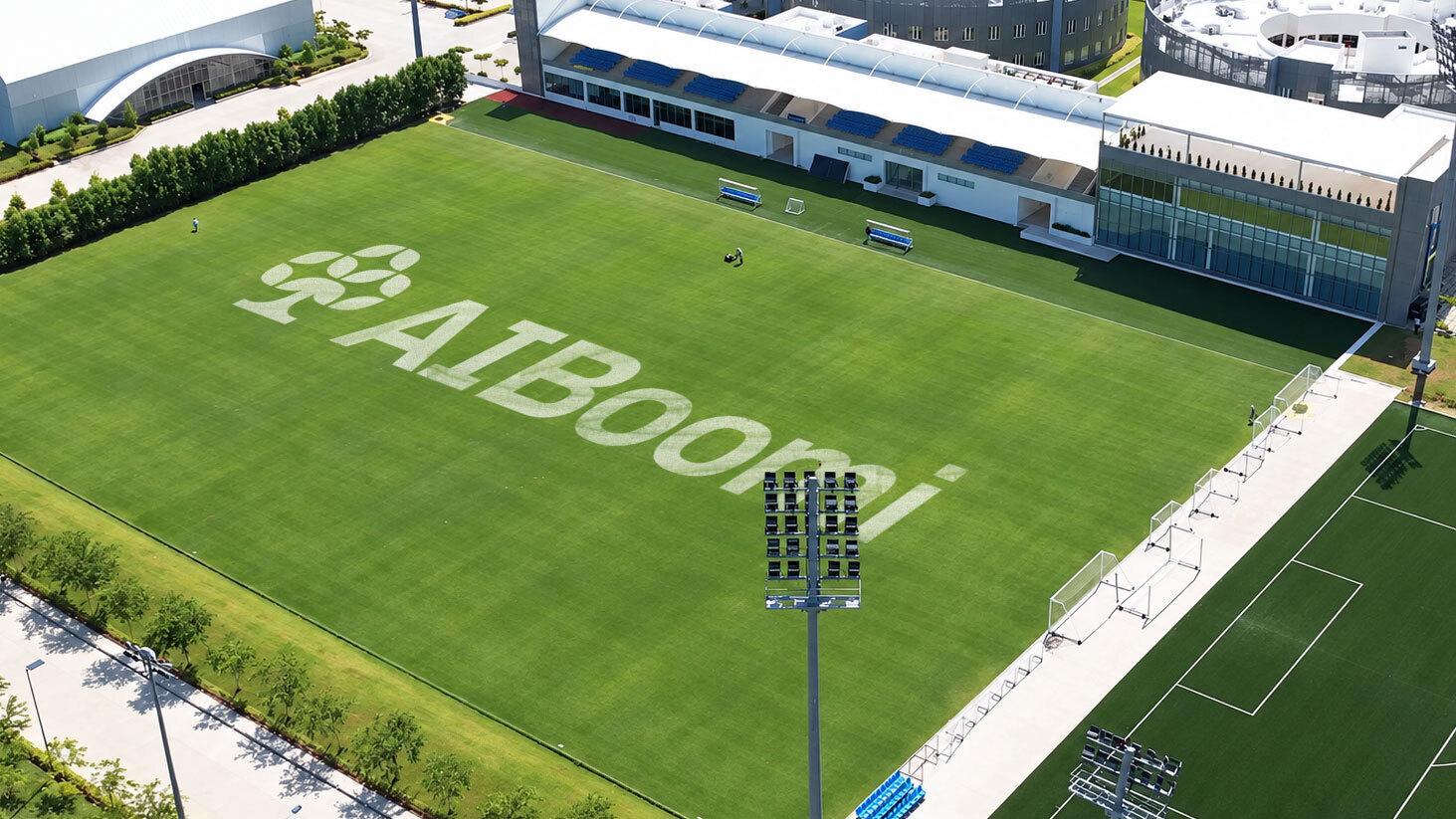
When I heard that AIBoomi Bootcamp ’26 | Chennai would be held at FC Madras, I was sold almost immediately. My reasons, admittedly, were sentimental.
FC Madras is a state-of-the-art football facility in Chengalpattu, more than 60 kilometres away from Chennai. It is the kind of place built deliberately away from the distractions of the city, where young footballers come to train, stay, learn and become better at their game.
But once the nostalgia wore off, some fairly reasonable questions remained.
Why bring more than 40 B2B founders all the way here?
Why make it residential?
Why a football training facility?
Why not find a nice hotel in Chennai, put up a large screen, arrange enough coffee, run through the sessions and send everyone home?
Twenty-four hours later, I understood.
Founders have plenty of places to perform. Very few places to practise.
Where do you actually stand?
We spend a great deal of company-building pretending to know.
Customers expect answers. Employees look for conviction. Investors look for clarity. Candidates want to know where the company is going. The market has little patience for a founder who begins every second sentence with, “I’m not sure.”
So founders learn to project certainty. The danger begins when you start projecting it to yourself.
Ashwini Asokan and Anand Chandrasekaran had designed the Bootcamp to attack precisely that. Before anyone tried teaching founders anything, they asked them to look at their own companies.
The first hour was spent understanding who was in the room. Every startup introduced what they were building, whom they were building it for, and why they had come. Those introductions became context for everything that followed.
You cannot coach a player without understanding their game.
The founders then began assessing their companies across two fronts: how AI-native their operations really were, and where AI actually sat inside their products.
Not where the pitch deck said it sat. Not where they hoped it would sit six months from now. Where it stood today.
By the end of Day 1, they had two scorecards. One held a mirror to their operations. The other to their product.
There is something wonderfully uncomfortable about a scorecard. It doesn’t care much for the company you believe you are building.
It records the game you are actually playing.
The coaches
There was another reason the room worked. The people asking the difficult questions had played the game themselves.
Ashwini and Anand started Mad Street Den in 2013, when building an AI company did not earn you automatic entry into every startup conversation. They went on to build Vue.ai, taking AI into products used by businesses globally before the company was acquired.
So when they spoke about building an AI-native company, they weren’t commentating from the stands.
They had scars.
One of their early sessions ran for three or four hours, but never settled into a lecture. Questions were taken as they emerged. Founders challenged ideas. Ashwini and Anand challenged them back. A problem raised by one company would occasionally reveal itself in five others.
Some tactical formation ideas from those hours were worth writing down:
⚽ Being AI-native is not about adding AI to existing workflows. It begins with asking whether the workflow itself should still exist.
⚽ A company needs a shared “brain”. What it learns should be captured, connected, retrievable and improved, so every new piece of work does not begin from zero.
⚽ On the operations side, AI should ultimately move one or more of three things: speed, cost or decision quality.
⚽ On the product side, the test changes: adoption, outcome completion, experience and retention.
⚽ And perhaps most importantly, do not spread AI thinly across everything simply because you can. Find the constraint. Pick where it matters. Go deep.
There was another person in the room who made the idea of a training ground feel even more complete.
Suresh Sambandam of Kissflow joined us later on Day 1 and stayed through the rest of the Bootcamp. Not as a speaker or a facilitator. For most of it, he was simply part of the audience.
He listened. Took notes. Asked questions. And when the conversation opened up, he spoke vulnerably about how he is building Kissflow today, how he is thinking about growth, and some of the shifts he is observing as the ecosystem moves deeper into an AI-powered world.
I found myself watching him occasionally. Here was someone who has spent years building a company, sitting in the same room as founders at very different stages, still raising his brows with curiosity, chuckling at familiar problems, and taking it all in like a student of the room.
Perhaps that is the other thing about a training ground.
Experience doesn’t graduate you from it.
At AIBoomi, we talk a lot about learning from one another. Suresh didn’t need to say much about that idea. By simply being there as a student of the room, he was practising it.
The learning never stops. Maybe the moment you think it has is precisely when you need to return to training.
Ashwini also took aim at an obituary the technology industry has been writing with remarkable enthusiasm.
SaaS is dead.
Her response was refreshingly uncomplicated: we are still building software.
Terminology will change. Interfaces will change. Business models will evolve. AI will fundamentally alter what software does and how humans interact with it. But software did not disappear because the vocabulary around it changed.
Sometimes the first thing a training ground needs to fix isn’t your technique.
It is what you’ve been told to believe about the game.
Practising in public
Later that evening, after dinner, three founders volunteered to do something most founders spend years learning not to do.
They exposed the unfinished parts.
No carefully rehearsed performance or hiding behind the comforting distance of a polished story. Their companies were taken apart in front of the room.
What exactly does the product do? For whom? What is immediately clear? What isn’t? Where does the value live? What might the founder be seeing because they have spent months staring at the product that a customer simply won’t?
Ashwini and Anand weighed in. Experienced people in the room did too. Other founders joined the teardown.
There is a peculiar vulnerability involved in allowing people to inspect something you have built. A company can become deeply personal. Criticism of the product can begin sounding suspiciously like criticism of the person who built it.
But training requires separating the two.
A coach pointing out a bad pass isn’t questioning your worth as a footballer. They are trying to make sure you don’t make the same pass on match day.
AI is product
The next morning began less like a presentation and more like a review of match footage.
Founders had arrived having already shared their most immediate problems and priorities. Ashwini and Anand worked through them, sometimes one founder at a time, sometimes as clusters because an individual problem often turned out to be shared.
Then came the Mad Street Den story.
Years of building AI before the current wave had given Ashwini and Anand a useful perspective on the difference between possessing impressive technology and building something somebody will actually pay for.
The idea that stayed with the room was deceptively simple:
AI is product.
It’s not a decoration, a feature added because the market now expects those two letters somewhere on the website, or a technical sophistication searching desperately for a customer problem.
There is an enormous distance between building impressive AI and building something a customer cannot imagine returning to life without.
Companies can die somewhere inside that distance.
Expertise without the armour
One of my favourite moments happened before Surendran Balachandran from Atlan had even begun his session on marketing and content in the age of AI.
Before going up, he came to me with his presentation.
“Take a look. Tell me if this is too confusing or complicated. Tell me if something is missing.”
There is nothing extraordinary about those words. But they were enough to make it a worthy recall. Here was someone arriving to teach a room, asking someone else whether his teaching could be better.
Then he went up and opened with a question that immediately unsettled the room:
How much of your website traffic today is coming from humans, and how much from AI?
That question opened an entirely different conversation about discovery, content and growth in a world where the audience consuming what companies publish is no longer exclusively human.
A few of Suren’s observational volleys sharpened that shift:
⚽ Your website already has two audiences: humans and agents reading on behalf of humans. On one B2B site Atlan measured, roughly two-thirds of weekly sessions showed machine rather than human behaviour.
⚽ Discovery is fragmenting. Chat assistants, search, communities, founder profiles, developer ecosystems and events all play different games.
⚽ Substance travels. Format doesn’t. Build the deep answer once on your own domain, choose a couple of platforms where you will create natively, and let everything else become a derivative or nothing at all.
⚽ Hand work to agents based on the cost of being wrong. Start where mistakes are cheap and reversible. Leave things like outbound until much later, where a mistake can burn both your list and your reputation.
⚽ Execution is becoming abundant. Taste and judgment aren’t. Agents can draft, adapt, report and QA. The founder still owns the point of view, the quality bar and what ultimately gets shipped.
Prem Kumar, who had previously been part of the Mad Street Den and Vue.ai journey, took the conversation further into growth engines, performance marketing and lead generation.
HighLevel, our title sponsor, could easily have stopped at sponsorship. A logo on a banner, a few agreed deliverables, a handshake, done.
Instead, their team entered the learning itself, sharing how they thought about data and AI stacks.
There is a difference between sponsoring a community and participating in one.
One puts your name in the room. The other puts something of value into it.
The question no slide anticipated
Between conversations about AI, product and growth, a founder asked Ashwini and Anand something no presentation had prepared for.
They are husband and wife. So how do you build a company together when you also go home together?
The room laughed. Then they answered candidly.
Problems at home can follow you into the office. Problems at work can follow you home. Over time, they had learnt to create clarity around both. Even within the company, their territories became distinct. Anand concentrated on product and technology. Ashwini focused on strategy and operations.
It was a small detour from the curriculum. Perhaps one of the more important ones.
Because founders do not build companies in isolation from their lives. They build them in the middle of marriages, families, friendships, health, exhaustion, ambition, fear, school pickups, difficult mornings and everything else that refuses to disappear simply because there is a board meeting tomorrow.
We talk endlessly about founder-market fit.
Perhaps there are other kinds of fit worth protecting too.

After training
There is something anyone who has travelled with a sports team eventually learns.
Not everything that builds the team happens on the field. Sometimes it happens on the bus. At dinner. In a changing room. Or at 11 at night when two people who spent the entire day discussing work suddenly start talking about everything except work.
Making the Bootcamp residential initially seemed like a logistical choice. It wasn’t.
Founders stayed in shared accommodation, often two to a room, spread across blocks and row villas inside FC Madras. The formal sessions eventually stopped. The conversations didn’t.
Smaller groups formed. People spoke about companies, then gradually about lives beyond them. Some conversations became more vulnerable precisely because there was no microphone, facilitator or next slide waiting.
This is the part of community-building that is almost impossible to manufacture. You can design the conditions, but you cannot schedule the friendship. You can decide who shares a room, but you cannot decide what they will trust each other with at midnight.
And perhaps that is why taking everyone 60 kilometres away from Chennai finally made sense.
Sometimes you need to travel far enough away from your everyday life to see it properly.
I was merely a spectator to what unfolded here.
Prajna Chandra (PC) led the Bootcamp, with relentless support from Avinash and Keerthi, who remain two of the strongest backers of everything we build internally.
And then there was Surya Kannapiran, the volunteer who seemed destined for this room, carrying the spirit of the community all the way to the final whistle.
If you want to see what those 24 hours added up to:
Before match day
When I first heard that the Chennai Bootcamp would happen at FC Madras, I wanted to go because football still occupies a very tender part of my life.
I thought I was returning to a familiar kind of place. I hadn’t realised how familiar.
For 24 hours, more than 40 founders were asked where they actually stood. They were given scorecards. Their products were taken apart. Their assumptions were challenged. Their questions were answered, including some nobody had planned for.
They ate together. Stayed together. And somewhere between the sessions, teardowns, meals and late conversations, they helped one another see parts of their game that are difficult to see alone.
An offsite can give you distance. A conference can give you information. A stage can give you visibility.
But a training ground asks something different of you.
It asks you to admit that you still need practice.
Founders already have enough stages on which to perform. Investor meetings. Customer calls. Demo days. Conferences. Boardrooms. Social media. Places where certainty is rewarded and hesitation can feel expensive.
Perhaps they need more training grounds.
That’s why we’re building the next one.
AIBoomi Bootcamp ’26 is heading to Pune, with two residential days in Lonavala for founders building AI-native companies or making the journey from SaaS to AI.
If you’re somewhere in the middle of building, questioning, unlearning and figuring out what needs to change next, come practise with us.
🥅 https://luma.com/BootcampPune
I left cricket because I couldn’t find my place in the team. Football eventually gave me one.
More than two decades later, standing on a football training ground surrounded by founders, I still felt like a novice with a long way to go. And perhaps that was the lesson.
You don’t come to a training ground to prove how good you are.
You come to discover how much better you can become.
Before match day.