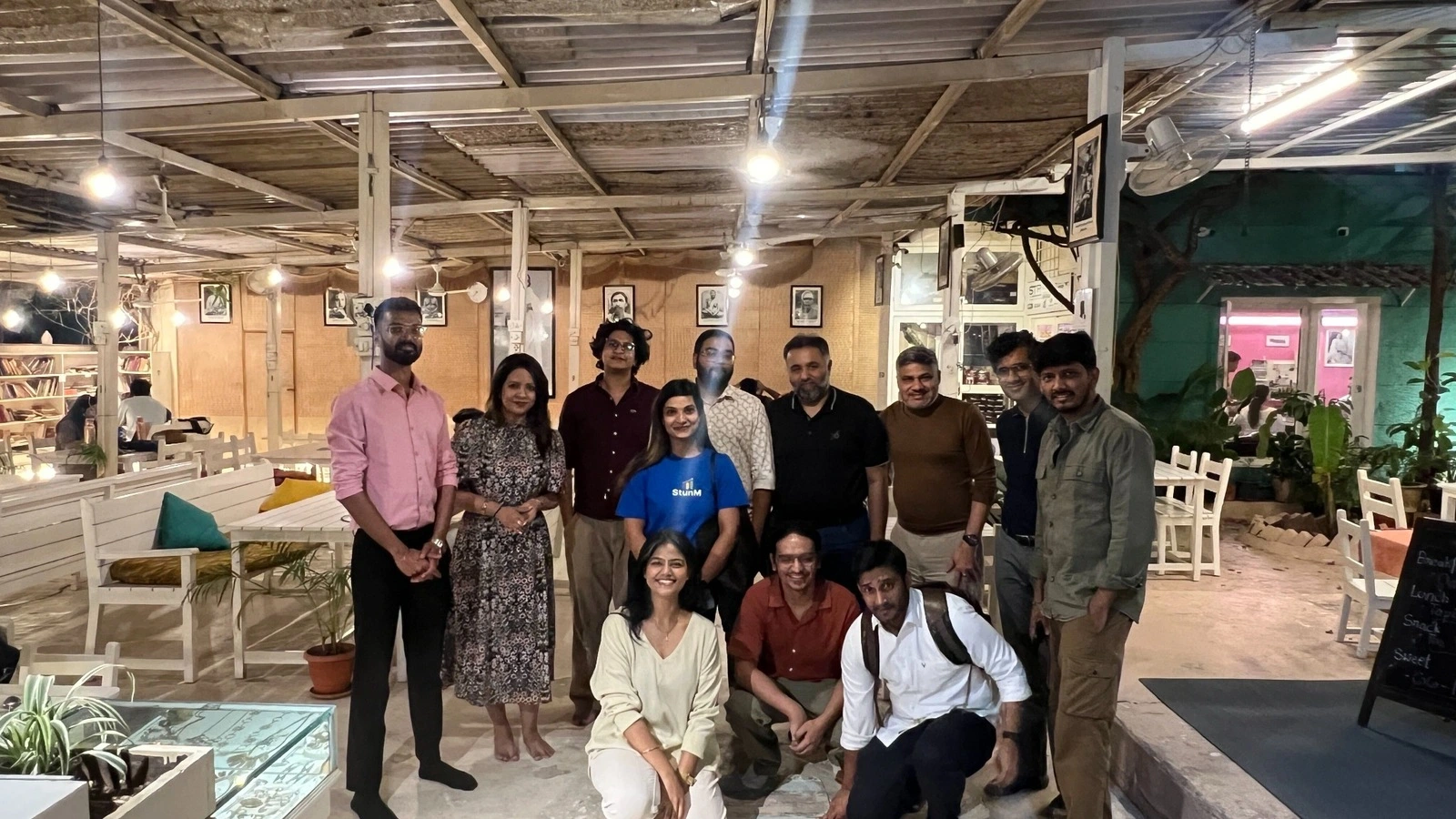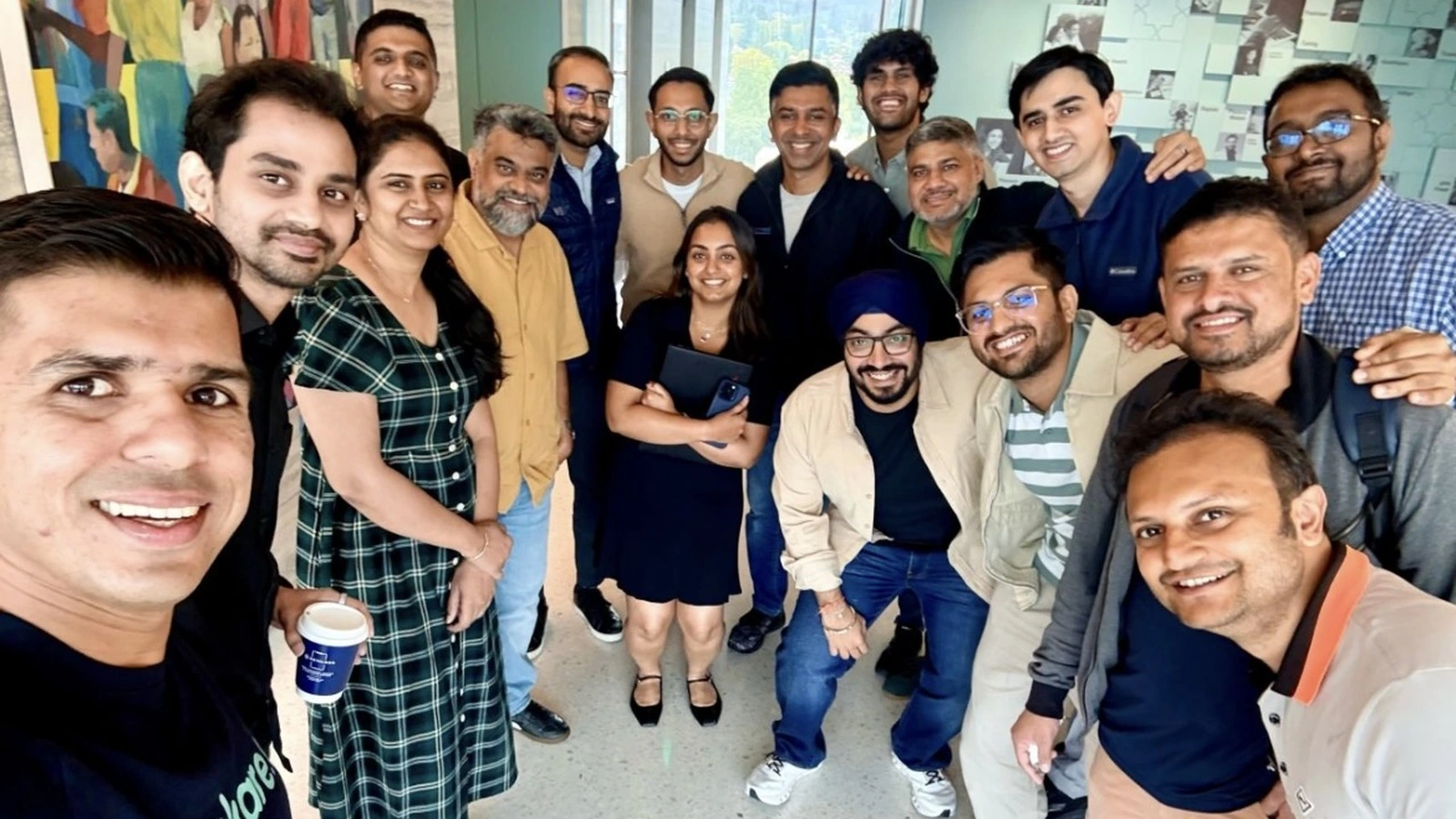
Alongside smaller, more intimate gatherings like our local Demo Rooms and Expert Hours, we’ve wrapped up the second cohort of Vertical Velocity and another memorable edition of Caravan in the Bay Area. All of these have given us plenty to celebrate, and even more to think about.
Meanwhile, AI has continued to reshape the world around us at a pace that leaves very little time to catch our breath.
Somewhere in the middle of all this, an old memory came back to me.
I must have been a little boy when my father used to take me around on his green Bajaj 150 scooter. This was sometime around 1979.
Like most middle-class children growing up in India, I had a front-row seat to the world. Quite literally. I stood on the footboard of that scooter, holding on to the stems of the rearview mirrors as my father navigated the roads. As I grew taller, I graduated to the backseat.
I remember him teaching me something rather important about the scooter.
The reserve tank.
Back then, scooters had a little fuel tap that you could turn when the petrol ran low. It gave you a few more kilometres to find a petrol bunk before the scooter came to a complete halt. My father explained how it worked and why you had to pay attention to it.
At that age, I didn’t think much of it. It was just another thing my father knew.
Years later, around 1995, I bought my first scooter. A black LML Vespa.
I was in Delhi, starting out in my career, working in sales and travelling anywhere between 100 and 125 kilometres every day for meetings. Fuel was an expense I couldn’t take lightly. I had to be careful about how much I spent, how far I travelled, and where I could refuel.
And I spent a fair bit of time riding on reserve.
That’s when I understood what my father had been trying to teach me.
When your tank is full, you rarely think about every kilometre. You just ride. But when you’re running on reserve, something changes. You pay attention to the road. You think about the distance ahead. You become conscious of every turn you take.
And perhaps most importantly, you start thinking about where you’ll refuel next.
I’ve been thinking about that lesson quite a bit lately, especially as we look at the next chapter of AIBoomi.
For years, we’ve helped bring together founders, volunteers, investors, and ecosystem leaders around a shared ambition of building world-class products from India. That journey has given us a strong foundation of relationships, trust, and a community willing to pay it forward.
But the world we’re building for is changing.
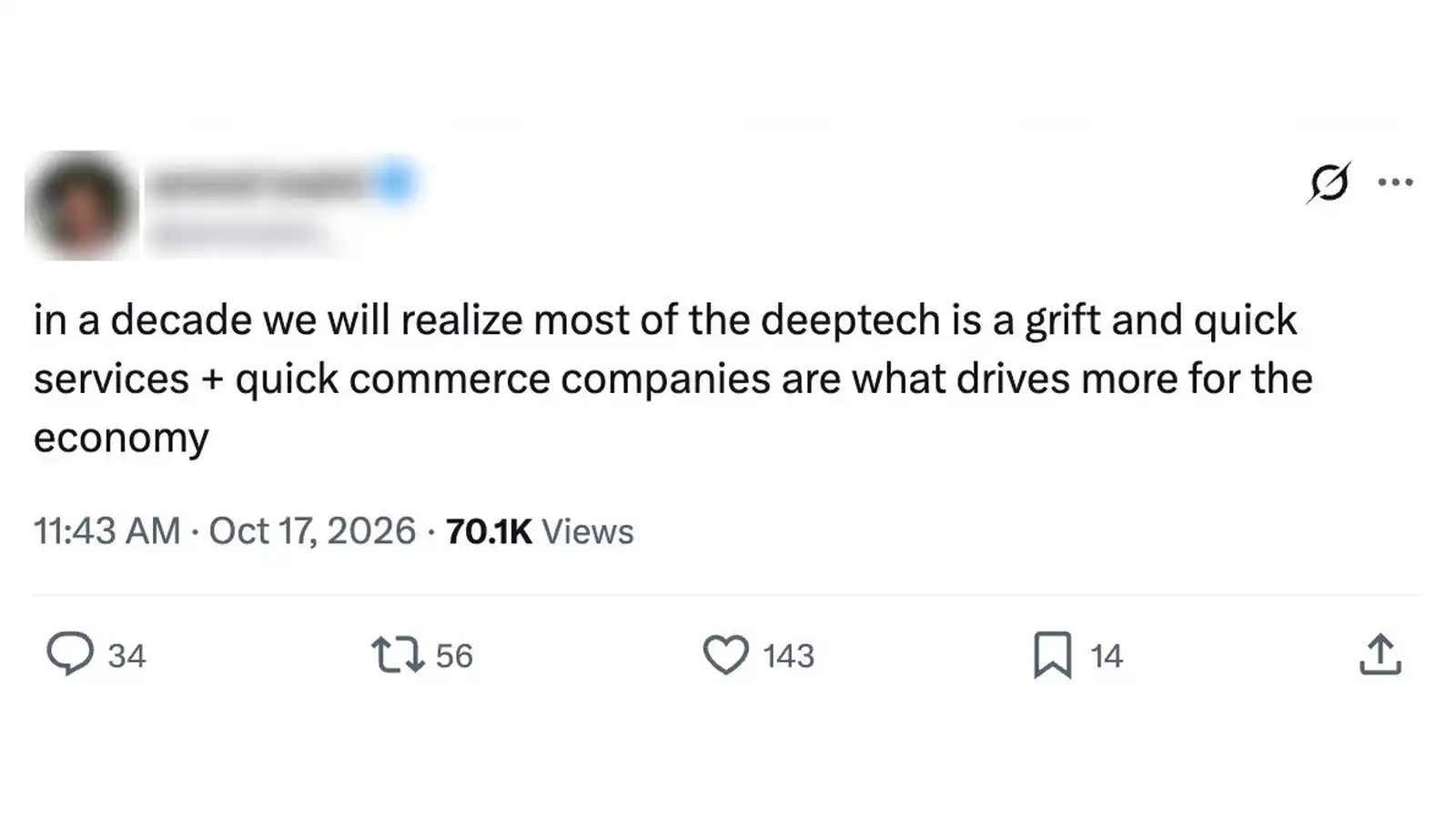
Look at where much of the money in AI is flowing today. Enormous investments are going into data centres, GPUs, inference infrastructure, and data collection. Yet a significant share of the economic value and technological ownership remains concentrated among a handful of global companies.
India has the talent, the builders, and the ambition. But where do we create lasting value of our own?
I believe that’s one of the most important questions our ecosystem needs to confront.
The application layer presents an enormous opportunity, although we’re still early in discovering what enduring businesses will look like. Voice AI, vertical applications, affordable inference infrastructure, and open-weight models could open up entirely new possibilities for Indian founders.
And beyond software alone, there’s an emerging world where AI meets manufacturing, robotics, drones, and other deep technologies.
These are areas where India has an opportunity to do much more than participate.
We have an opportunity to build and own.
A few days ago, I had a candid conversation with my team about what all of this means for AIBoomi. We questioned some of our assumptions, discussed what we could do differently, and challenged ourselves to think beyond the programs and events we’ve become familiar with.
It wasn’t an easy conversation. But it was an important one.
Because the real strength of a community isn’t measured only by how many people attend its gatherings. It’s measured by how useful it remains to the people who are building the future.
And that requires us to keep learning, particularly from the younger generation of AI-native founders who are approaching problems with entirely new instincts.
It also requires us to rethink the role we play in the ecosystem.
Could AIBoomi help identify promising founders working at the intersection of AI and deep technology? Could we bring the right knowledge, networks, and capital closer to them? Could we help emerging investment ecosystems understand the technologies and opportunities that deserve patient conviction?
These are some of the possibilities we’re beginning to explore.
I don’t have all the answers yet. But I know that our next chapter cannot be defined simply by doing more of what we’ve already done.
It has to be about doing what India needs next.
And this brings me back to my father’s scooter.
That little reserve switch was never a warning that the journey had failed. It was a reminder to think ahead, find the next petrol bunk, and prepare for the road that remained.
As we plan the coming quarter and AIBoomi ONE ’27, that’s precisely the mindset I want us to carry.
We have spent years building a community rooted in trust, generosity, and the belief that India can become a global product nation. Those foundations are stronger than ever.
Now we have to decide what we fill the tank with next.
And I want you to be part of that conversation. Tell us where you believe India can win in AI, what opportunities we’re overlooking, and how AIBoomi can help founders go further.
Because we are in the business of people before we come into the business of entrepreneurship.
The road ahead is changing. So must the way we prepare for it.
And I can’t wait to see how far we go.