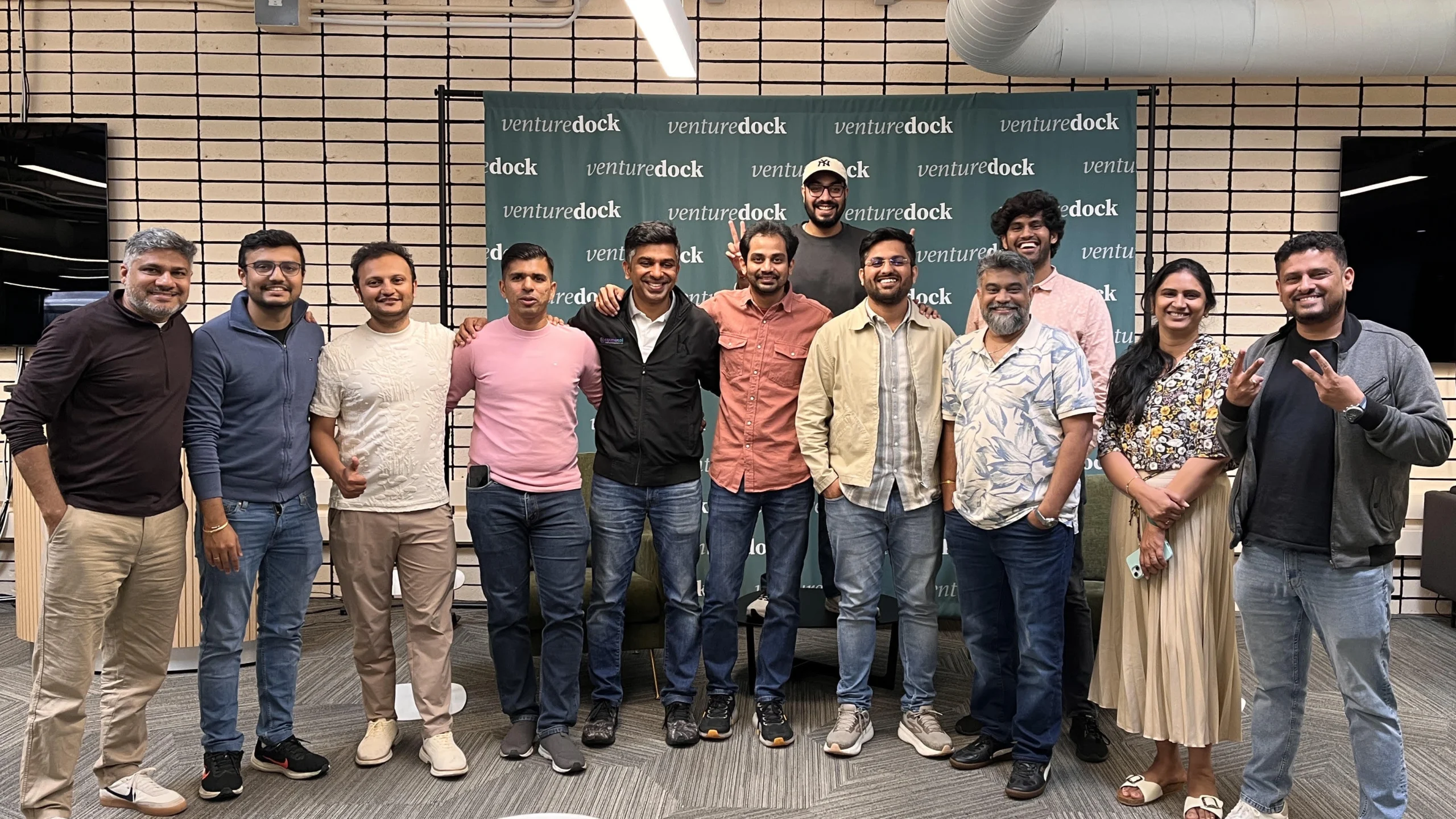
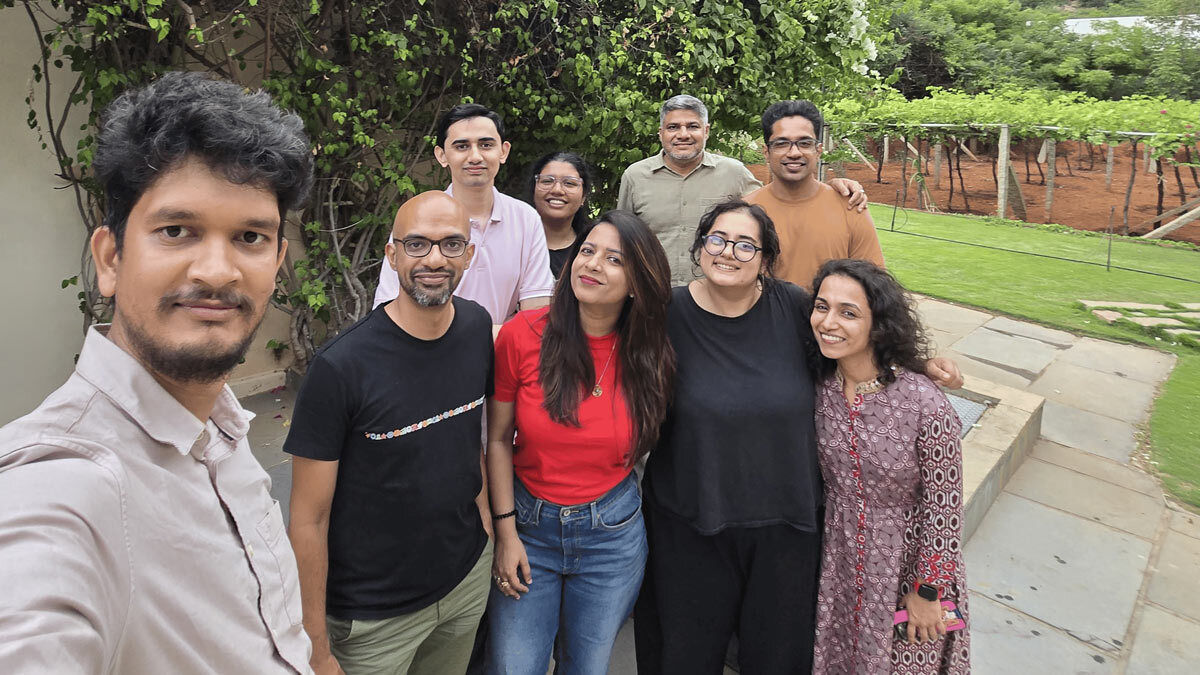
At 27,000 feet above the ground, on a flight to Bengaluru, I realised that meeting your teammates is as important as working with them.
It sounds obvious when written down. Most truths do.
For nearly eight months, the AIBoomi staffers had worked together without being together. We had attended calls, exchanged messages, chased deadlines, solved problems, created new ones, and filled our calendars with enough coloured blocks to create the illusion of closeness.
We were connected in all the ways modern work permits.
And yet, we had not met.
There is a particular kind of distance that technology cannot solve. You may know what a colleague is working on, but not how they enter a room. You may recognise the cadence of their messages, but not the silence before they speak. You may spend every day with a person’s thoughts and still remain unfamiliar with the person.
That was why this offsite mattered.
We landed in Bengaluru and travelled to Omnia by Nestates, a property near Yellodu Hills, set within nearly 500 acres of rugged forest land.
The villas were designed to live lightly within the landscape. They did not appear to conquer the forest as much as negotiate with it. Doors remained open. Walls gave way to trees. The outside was always present, with the still water in the pool reminding us that not everything worthwhile needs to be controlled.
For two nights, this became our home, office, dining room, theatre, and, for a few unfortunate minutes, the setting for a poorly executed paranormal incident.
The agenda was planned, but not imprisoned by time. We knew what we had come to discuss. We did not know what those discussions would uncover.
That is perhaps the point of an offsite. You do not travel all that distance merely to complete an agenda. You travel to discover what the agenda has failed to include.
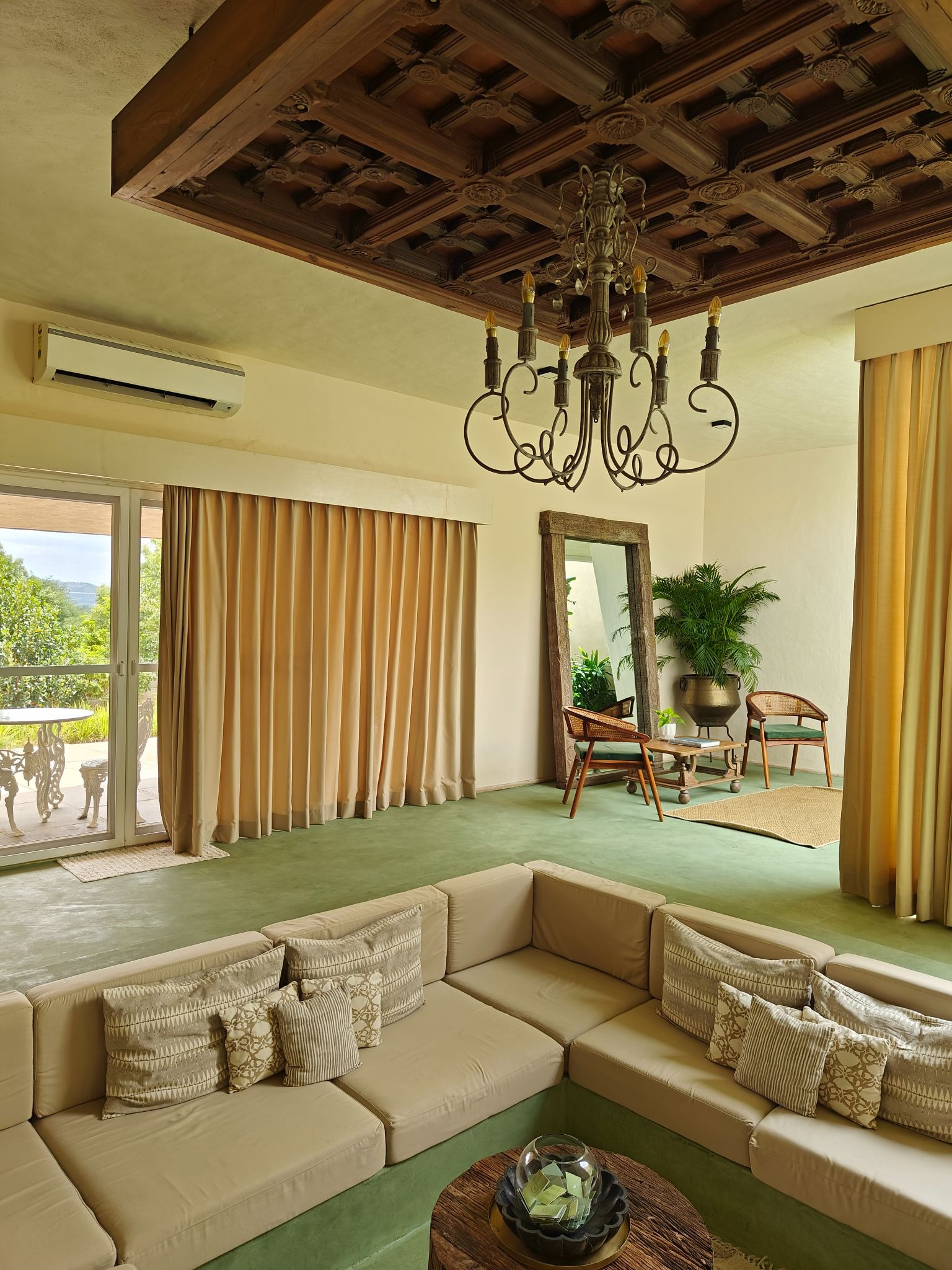
The mirror before the mission
Our first afternoon began with Jay and Sradha asking us to think about what it meant to build an AI-native community.
The question carried an uncomfortable corollary: how could we help create an AI-native ecosystem if we were not becoming AI-native ourselves?
It is easy to speak about transformation when transformation is somebody else’s responsibility. It is harder when the subject under examination is your own behaviour.
We spoke about the tools we used, the ones we ignored, and the habits we needed to unlearn. We discussed how each of us could audit our relationship with AI: not simply to become faster, but to become more curious, more capable, and more honest about where our work could improve.
AI-native, we realised, could not remain a descriptor for the founders and companies we served. It had to become an internal discipline.
The conversation then turned towards purpose. What did AIBoomi need from each of us? Why were we here? What were we uniquely responsible for? And where had the comfort of routine blurred the sharpness of that responsibility?
Avinash spoke with unusual transparency about the ecosystem, the organisation, and the work ahead. He told us where he needed help. He did not soften the uncertainty or pretend that leadership meant possessing every answer.
There is confidence in certainty. But there is trust in candour.
When your CEO sits at the same level and asks how the organisation can become better, the hierarchy does not disappear. Something more useful happens, responsibility spreads.
The open doors of Omnia became an accidental metaphor for the culture we were trying to protect. A workplace improves when fewer things are said behind closed doors. Inhibitions fall. Diplomatic masks loosen. People begin to speak not merely to be agreeable, but to be useful.
That evening, over dinner and drinks, we asked Claude to generate a few questions about life. They were deep enough to make us pause and light enough to keep us from becoming insufferable.
What began as an experiment with AI became a very human evening.
We answered. We argued. We laughed. We revealed small things that would never have surfaced on a work call. For a few hours, job titles lost their authority. We were not functions arranged around an organisation chart. We were people, each carrying a private history into a shared purpose.
Jay left before dawn the following morning to catch a flight. The rest of us slept a little longer, unaware that Day Two had saved its most difficult subject for breakfast.
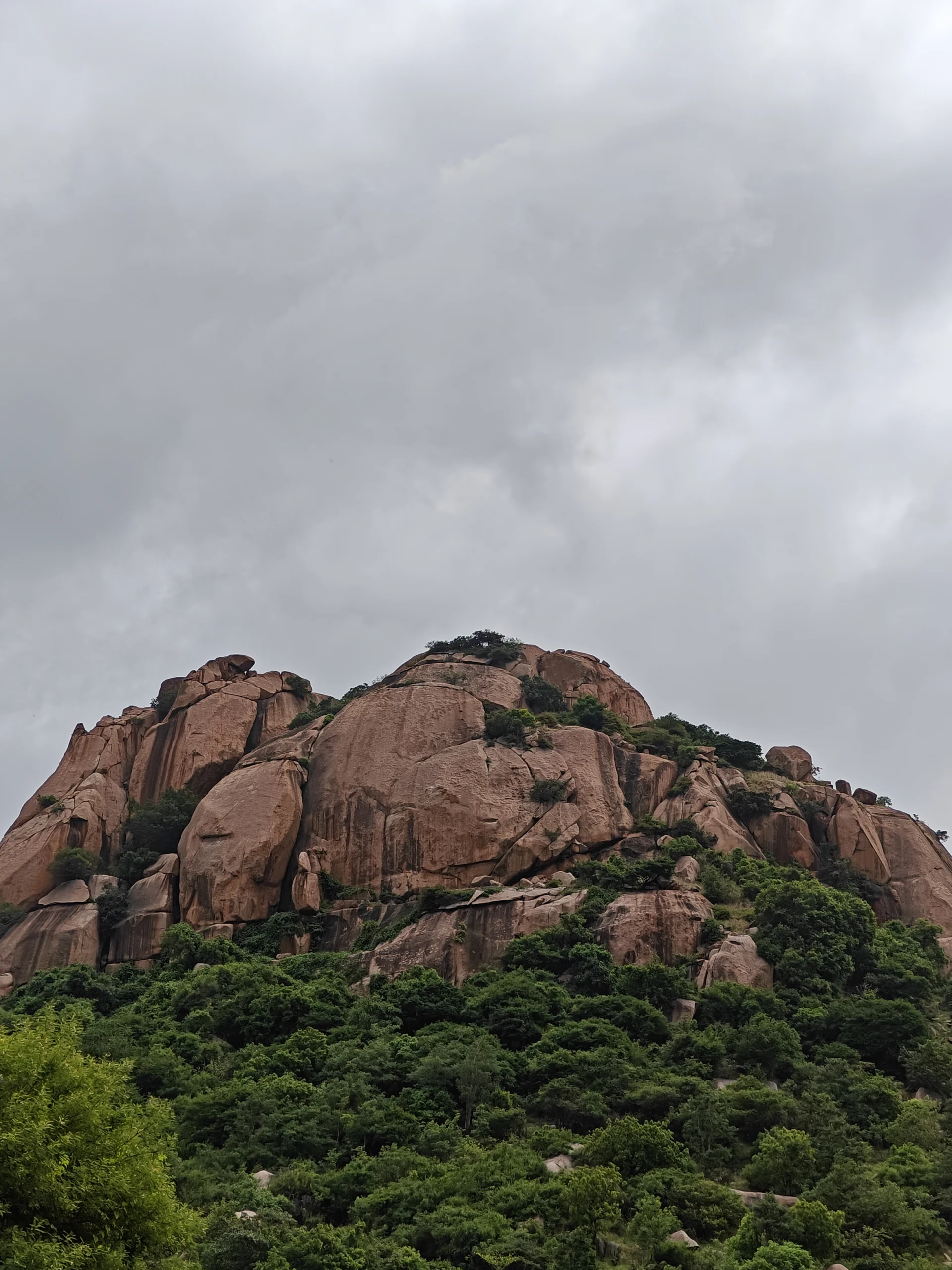
What the Rock Reveals
Rock has a way of revealing what softer ground conceals.
Keerthi opened the second day by opening the books.
We looked at the revenue model, the P&L, the operational costs, the money we generated, the money we spent, and the projections for the next eighteen months. There were no ornamental numbers designed to reassure us. The organisation was presented as it was.
Transparency is often spoken about as a cultural virtue. But like bedrock, it is something an organisation is built on, not something it merely celebrates. In practice, it is infrastructure.
When people understand how an organisation survives, they begin to see their work differently. A budget is no longer the concern of finance. A cost is no longer an abstract line item. Sustainability stops being a word used in annual plans and becomes a question inside everyday decisions.
Information creates context. Context creates accountability. Accountability, when it is shared rather than imposed, creates ownership.
The more we knew, the more difficult it became to remain spectators.
Georgie then took us through a teardown of the website. He examined its structure, experience, visual language, design dependencies, development constraints, and the distance between what it was and what it could become.
Yet the discussion was larger than a website.
It was about systems that allow good work to scale.
How do you help more people design without diluting the brand? How do you reduce dependence on a single resource without lowering the standard? How do you convert instinct into a system, and a system back into something that still feels alive?
Control is one answer. Clarity is usually the better one.
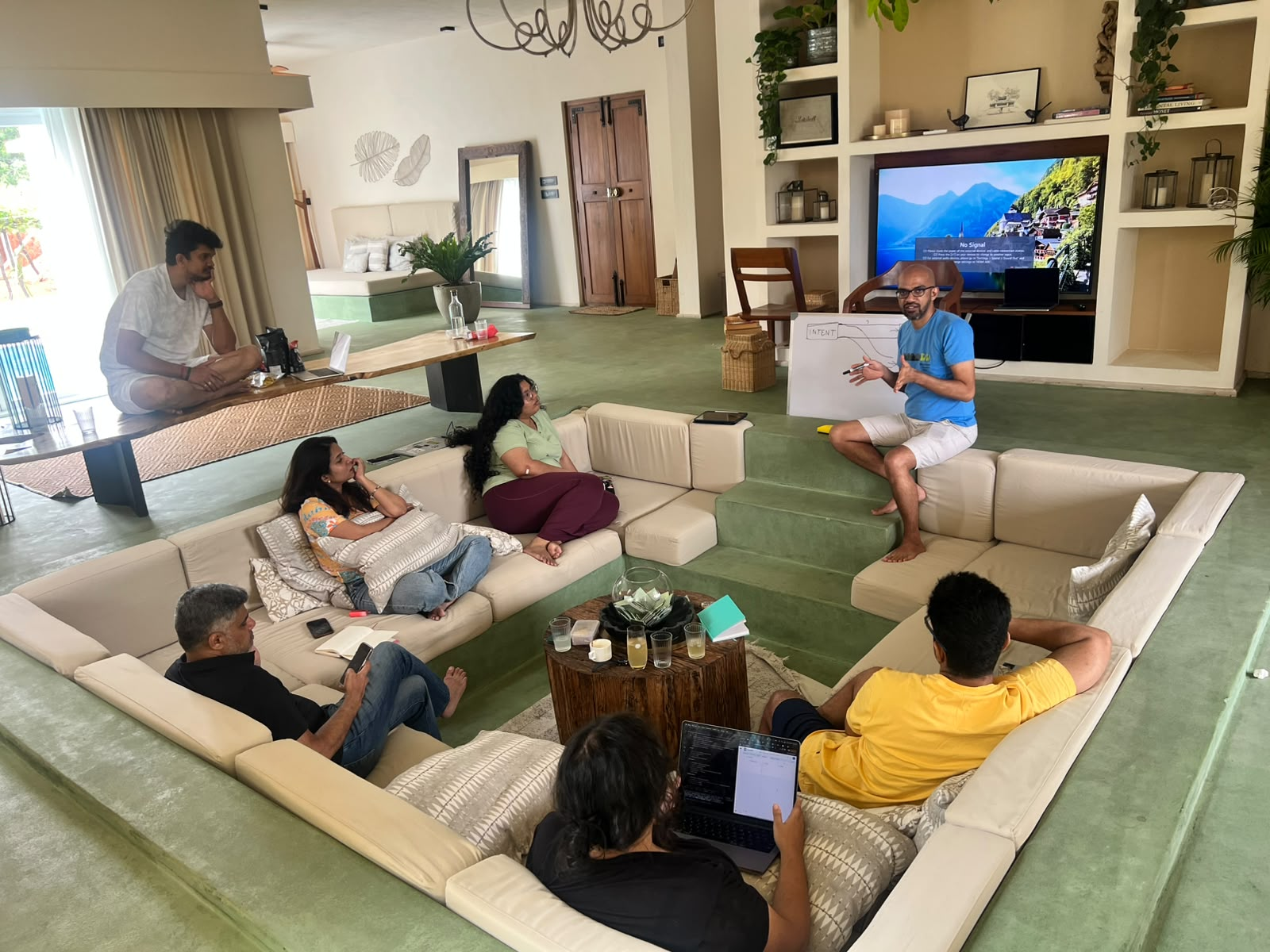
Stay hungry. Keep the hunger human.
After Georgie, it was my turn.
My session moved away from revenue, websites, and design systems. I wanted to speak about the person behind all of them.
I borrowed from Steve Jobs’ Stanford address and titled the session:
How to Stay Hungry… Not Foolish.
We are entering an age in which intelligence is abundant, speed is inexpensive, and creating something that looks finished has become dangerously easy.
That changes the nature of creative work.
AI can be a powerful sparring partner. It can question an assumption, expose a gap, improve a sentence, organise a thought, and help us travel further than we might have travelled alone.
But it cannot be the original source of our conviction.
A story must begin somewhere inside a human being. It must emerge from something noticed, endured, desired, feared, remembered, or believed. AI may help us express that truth. It cannot manufacture the experience that makes the truth worth expressing.
The danger is not that machines will learn to write like us. The danger is that we may begin to write like machines. Polished, plausible, efficient, and empty.
The same applies to how we care for our minds and bodies.
Motivation is celebrated because it is dramatic. Discipline is overlooked because it is repetitive.
Motivation makes promises in the morning and disappears by evening. Discipline arrives without a speech. It follows a cadence. It does the work even when the person doing it feels ordinary.
In the age of acceleration, discipline may be the last durable advantage.
From there, the conversation moved from individual discipline to organisational memory.
Ashiya and PC led a discussion on data and ecosystem intelligence. AIBoomi has always been built through relationships, with founders, volunteers, partners, staffers, investors, and ecosystem leaders. But relationships become fragile when they are stored across spreadsheets, inboxes, individual recollections, and systems that refuse to speak to one another.
We began discussing a single source of truth: a living database that could hold the memory of the ecosystem, inform our outreach, improve our communication, and become more intelligent every time it was used.
Not merely a CRM. Institutional memory.
Because organisations rarely forget dramatically. They forget gradually. One undocumented conversation, one departed colleague, one inaccessible spreadsheet at a time.
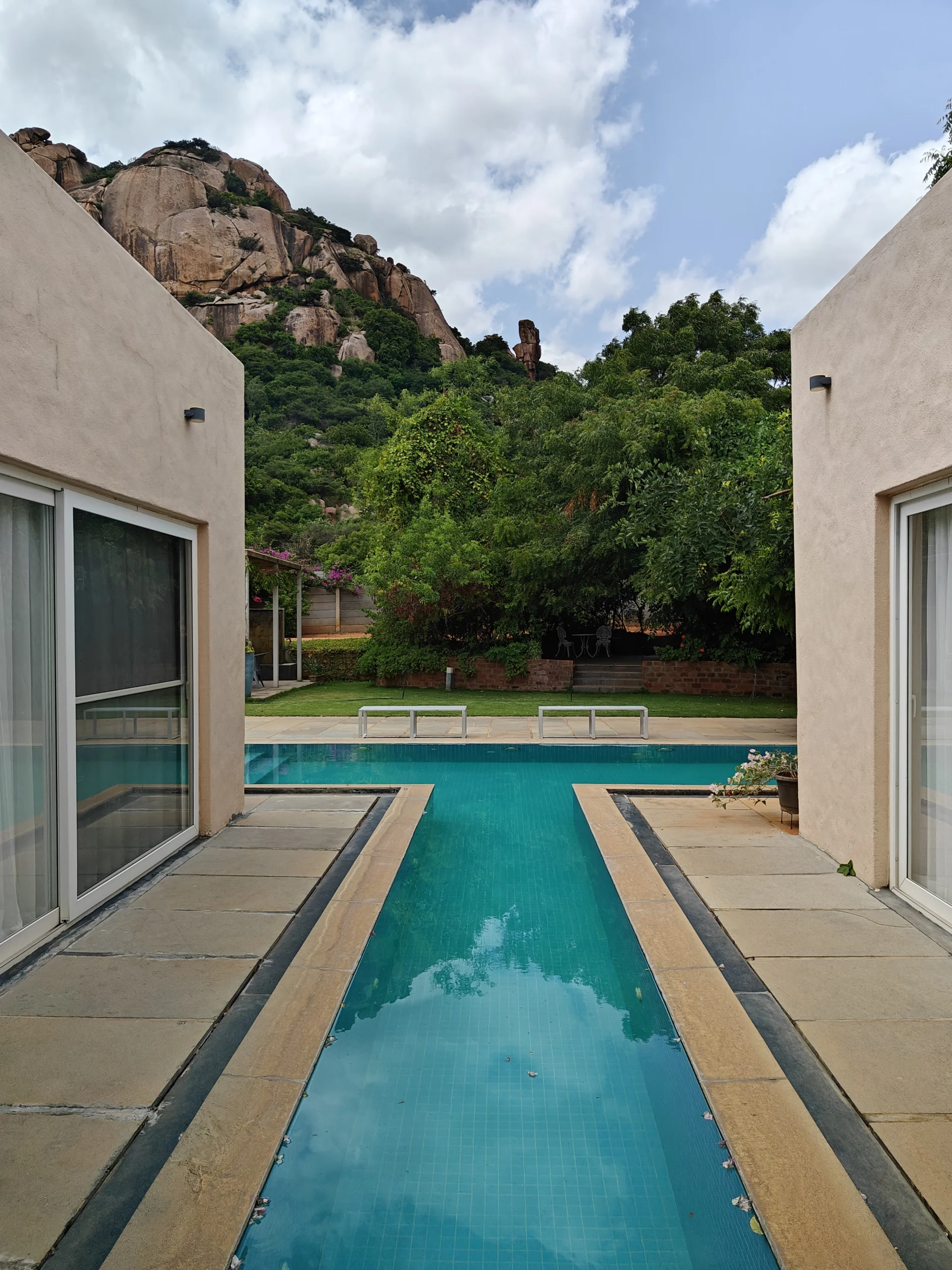
What Still Waters Reflect
Still water has an unusual honesty. It reflects exactly what stands before it. Nothing more, nothing less.
That evening, Keerthi and Sehar led us through a feedback exercise.
Each person received a sheet of chart paper. On the front, we wrote what we believed that person did exceptionally well. On the back, we wrote what they could improve.
The front was easier.
Most teams become skilled at praise because praise is socially inexpensive. It keeps the room pleasant. It creates no immediate tension. It allows everyone to leave dinner on time.
The back required more of us.
A team that says only sweet things is not necessarily kind. Sometimes, it is merely afraid.
Honest feedback asks for courage from the person giving it and generosity from the person receiving it. It must be sharp enough to be useful and humane enough to be heard.
As the sheets moved around the room, we were handed two versions of ourselves: the person we believed we were and the person our teammates experienced.
Sometimes, they agreed. And sometimes, they introduced themselves for the first time.
The exercise was not designed to diminish anyone. It was designed to make each of us more complete. Praise showed us what to protect. Criticism showed us what could no longer be ignored.
A mirror is useful not because it is flattering, but because it refuses to negotiate.
The ghost in the Bluetooth speaker
A few items remained unchecked on the agenda so we decided to complete them: watching a movie together, playing a few spirited rounds of Mafia, and recording a “Who is most likely to…” office-edition Reel for Instagram.
The night ended with an old offsite ritual.
At most of our offsites, a small group consisting of PC, Georgie, Avinash, and I attempt to frighten the others before everyone goes to sleep. The success rate is not worth publishing.
This time, PC connected his phone to a Bluetooth speaker. We recorded eerie noises and strange voice notes and played them through the villa, hoping to create the impression that something uninvited had joined us.
For a few moments, we believed we had produced terror.
Sradha found the source and called our bluff.
The haunting ended. Our dignity followed shortly after.
These things do not appear in organisational strategy. They cannot be linked to a metric, justified in a review, or attributed to a department. No board or governing council will ask how many people were frightened by a Bluetooth speaker in the previous quarter.
And yet, this is part of how teams become human to one another.
People need to see each other being wise. They also need to see each other being ridiculous.
Especially ridiculous.
Work can make adults perform a permanent degree of seriousness. Play removes the costume. It reminds us that beneath the functions, targets, responsibilities, and well-composed messages, there are still people who enjoy a bad prank in a dark forest.
That is not a distraction from culture.
That is culture.
The one-tenth
The next morning, we sat around the breakfast table and reflected on what the two days had meant.
My takeaway came from F1.
In Formula One, a tenth of a second can appear negligible. There is barely enough time to register consciously. Yet races, careers, and championships are decided by such fractions.
A tenth saved in the pit lane. A tenth found in a corner. A tenth gained through a better decision, a cleaner movement, or a team member doing one small thing with greater precision.
Nobody wins the race alone. The driver simply makes the collective improvement visible.
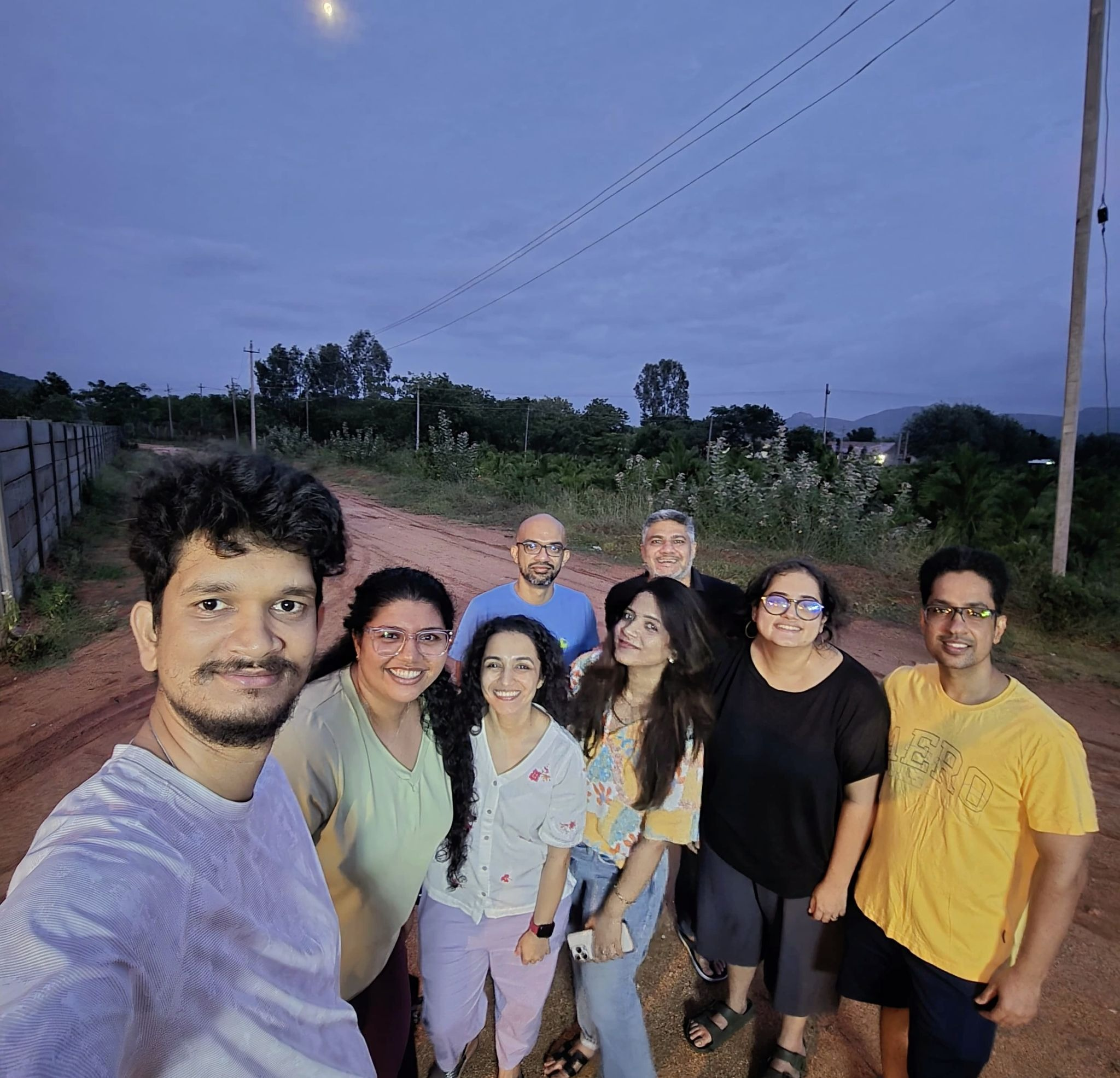
There were ten of us at the offsite. One left early (Jay). Another, forced to withdraw at the last minute because of a personal emergency but was still present in spirit (Keshav), having shared every collateral he had prepared before we began.
I began to wonder what would happen if each of us became 0.10% better at what we did.
More thoughtful in one conversation. More disciplined with one tool. More rigorous with one number. More honest in one piece of feedback. More careful with one relationship. More accountable for one decision. More human in one moment when efficiency would have been easier.
Ten people, each bringing 0.10%, becomes 1%.
Mathematically, the analogy is imperfect. Human progress usually is.
But the principle holds.
Communities are not made relevant by slogans. They remain relevant because the people inside them continue to improve without abandoning what made them human in the first place.
We are building in the age of AI. Speed matters. Curiosity matters. Systems matter. Data matters. Execution matters.
But empathy matters as well.
So does trust. So does play. So does telling the truth before it becomes convenient. So does meeting your teammates outside the small rectangles in which modern work contains them.
An offsite cannot transform an organisation in two days. That is too much pressure to place on a villa, a forest, a serene swimming pool, and a set of chart papers.
But it can remove distance.
It can remind people why they chose the work and why they chose one another. It can expose the things that routine had concealed. It can return a team to its responsibilities with fewer illusions and greater affection.
We arrived at Omnia as people who had continued working together despite not meeting for eight months.
We left understanding that proximity is not simply the absence of physical distance.
It is the absence of pretence.
It is the distance between what we know and what we admit. Between what we believe and what we practise. Between the organisation we are and the one we still have the courage to build.
The forest gave us room, the conversations gave us clarity, and the people who came together gave each other courage.
Now, the work begins again.
One conversation. One decision. One-tenth at a time.